Silence from Slovakia
The collection ‘Silence from Slovakia’ was made namely to process the loss of my paternal aunt, Marilyn, who passed from cancer in February 2025. I was lucky to make the majority of these works during a three-week residency at the Oberlin College Pottery Co-Op in March of 2025.
Special thanks: to the Oberlin Pottery Co-Op, especially Zoë Holland; Ann Geiger and Megan Adams-Irving of the Smithy Studio; my incredibly talented co-workers; my family and friends; and my husband, Leon. None of this work would have been possible without you.
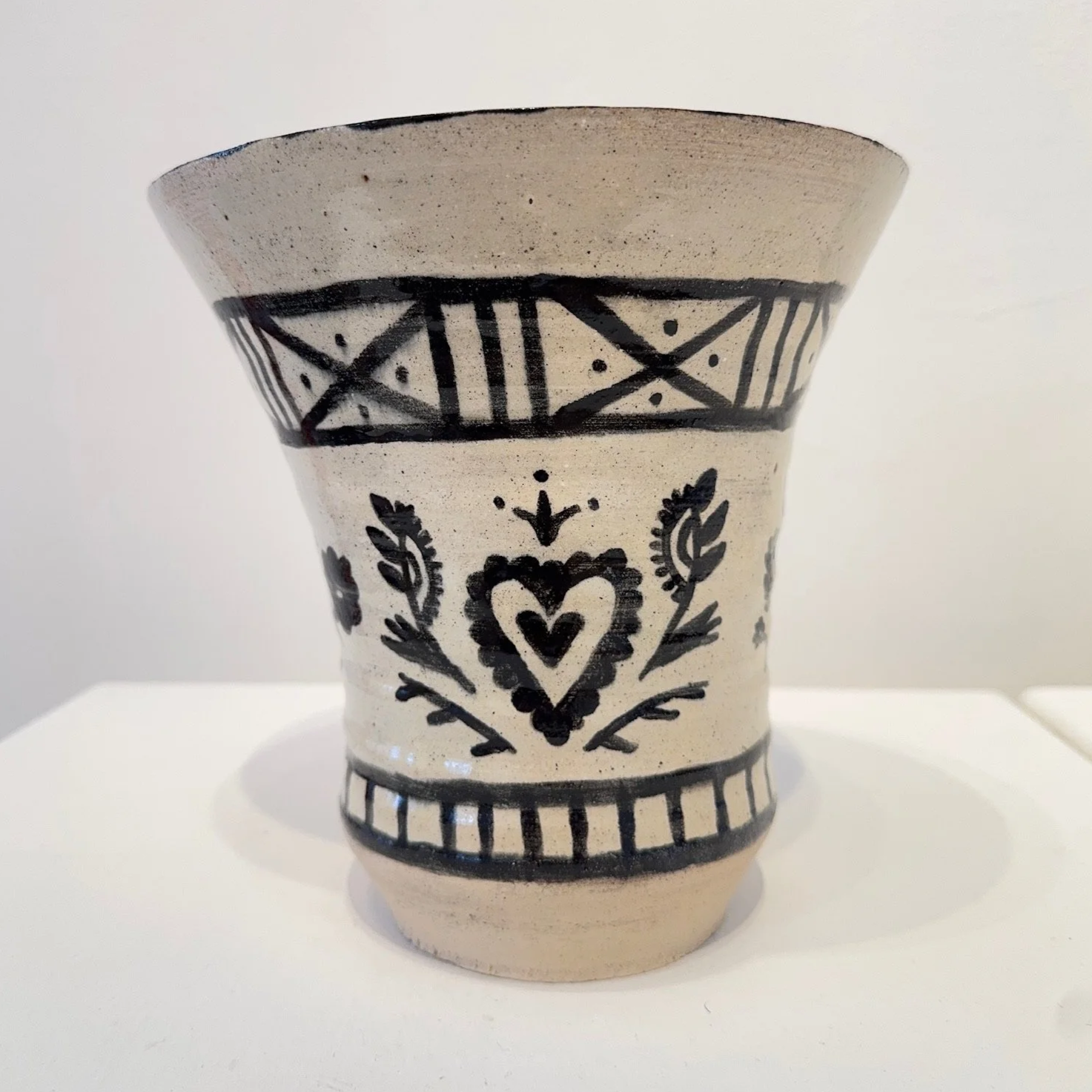
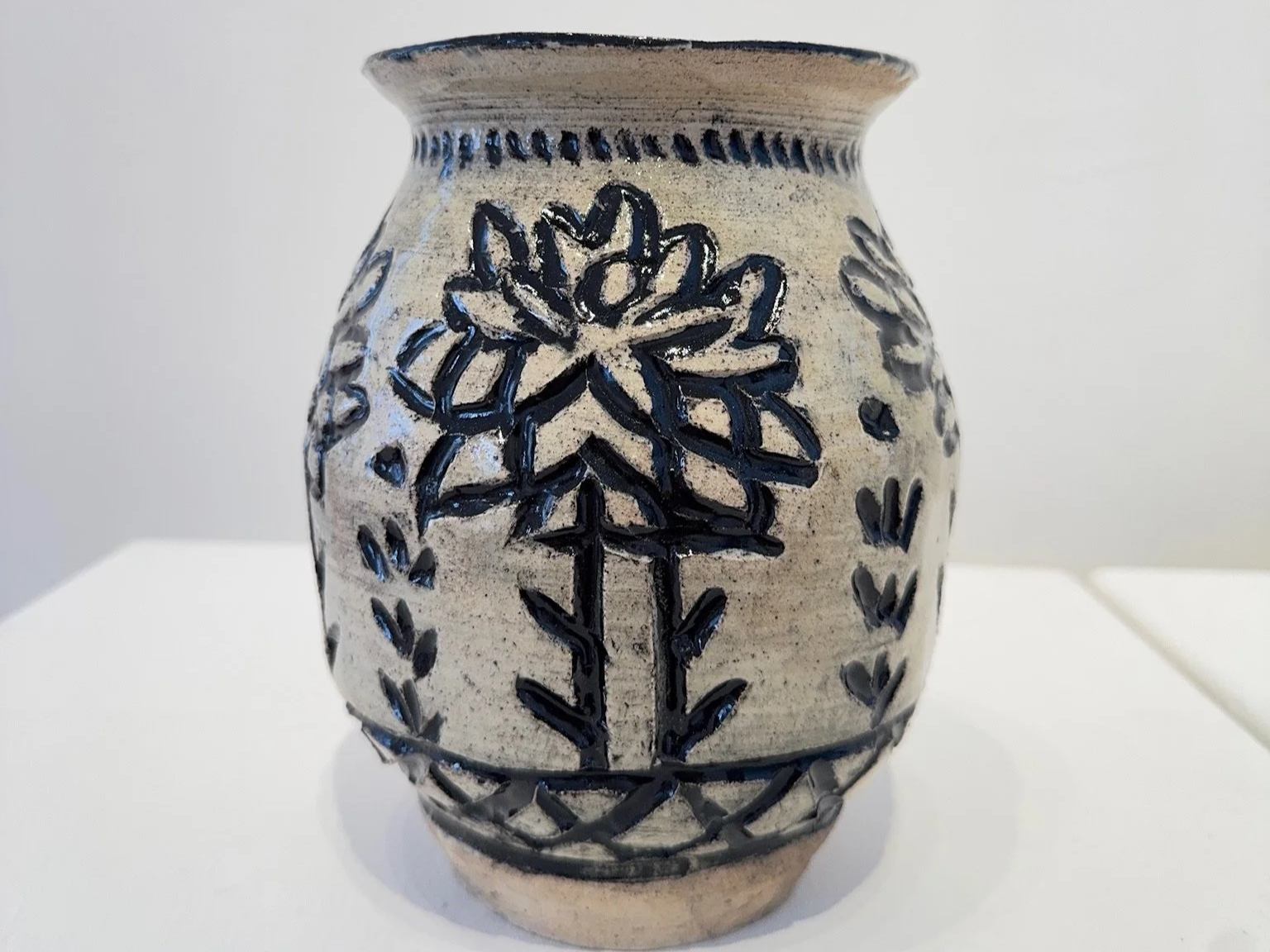
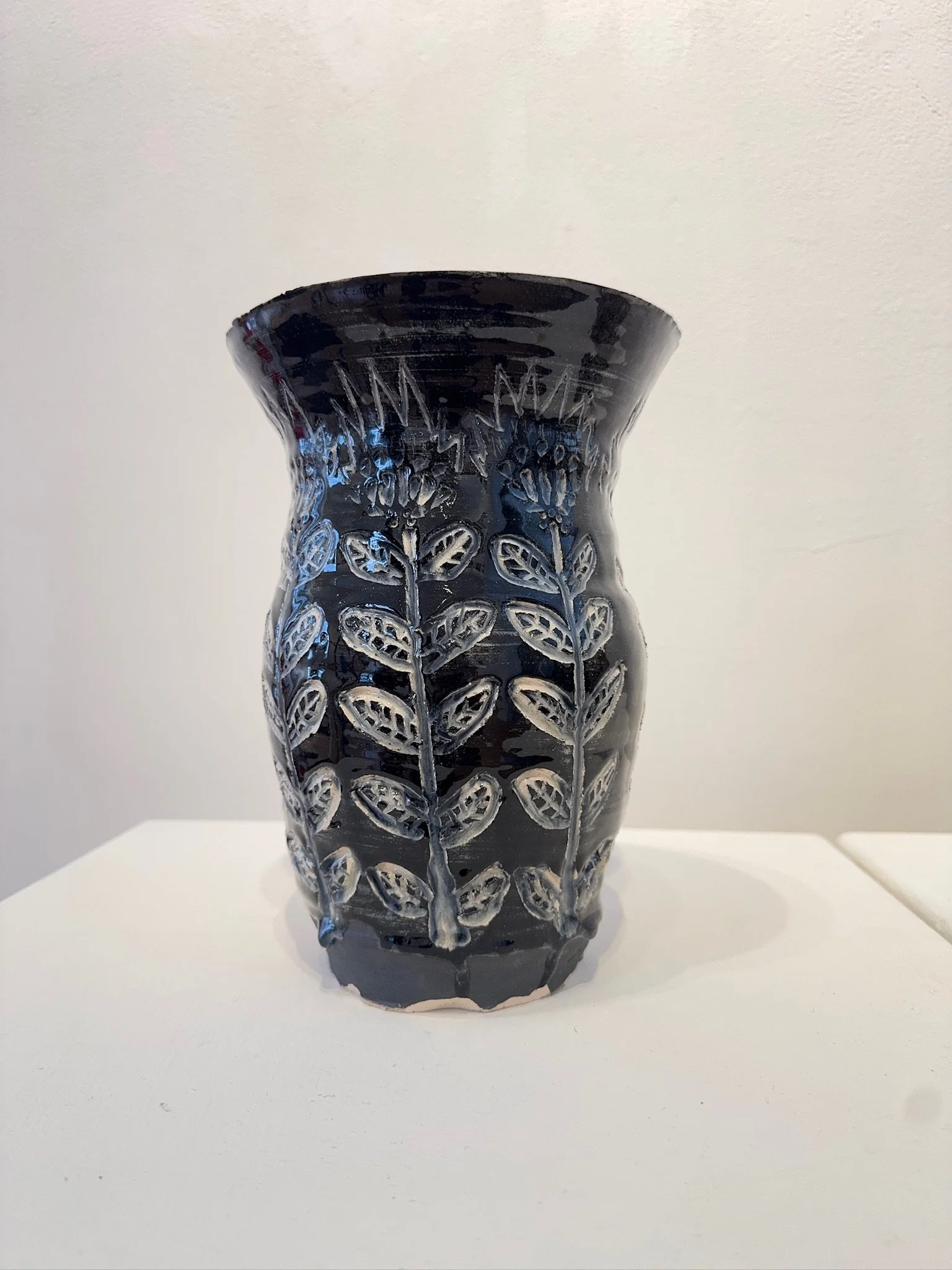
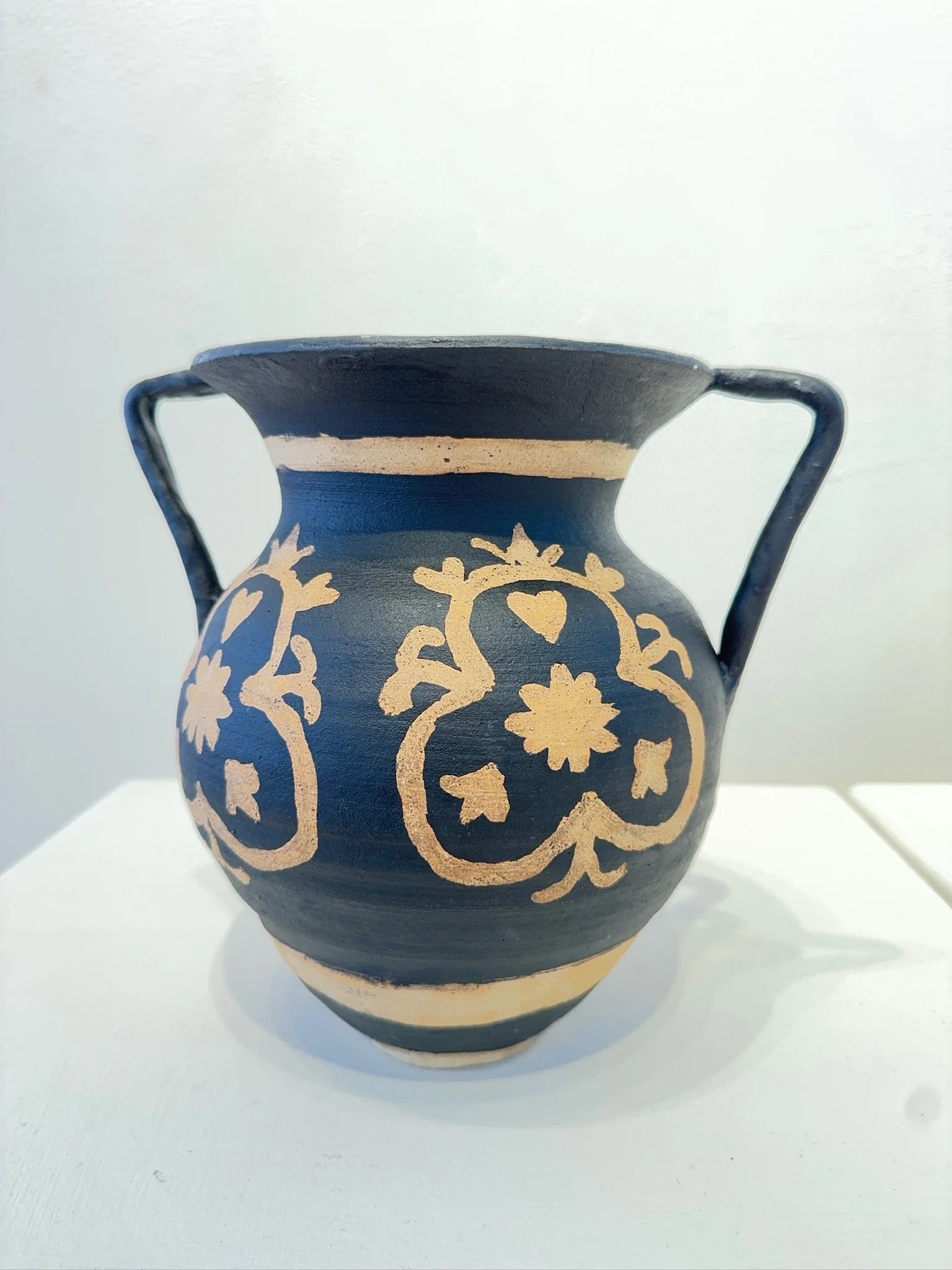
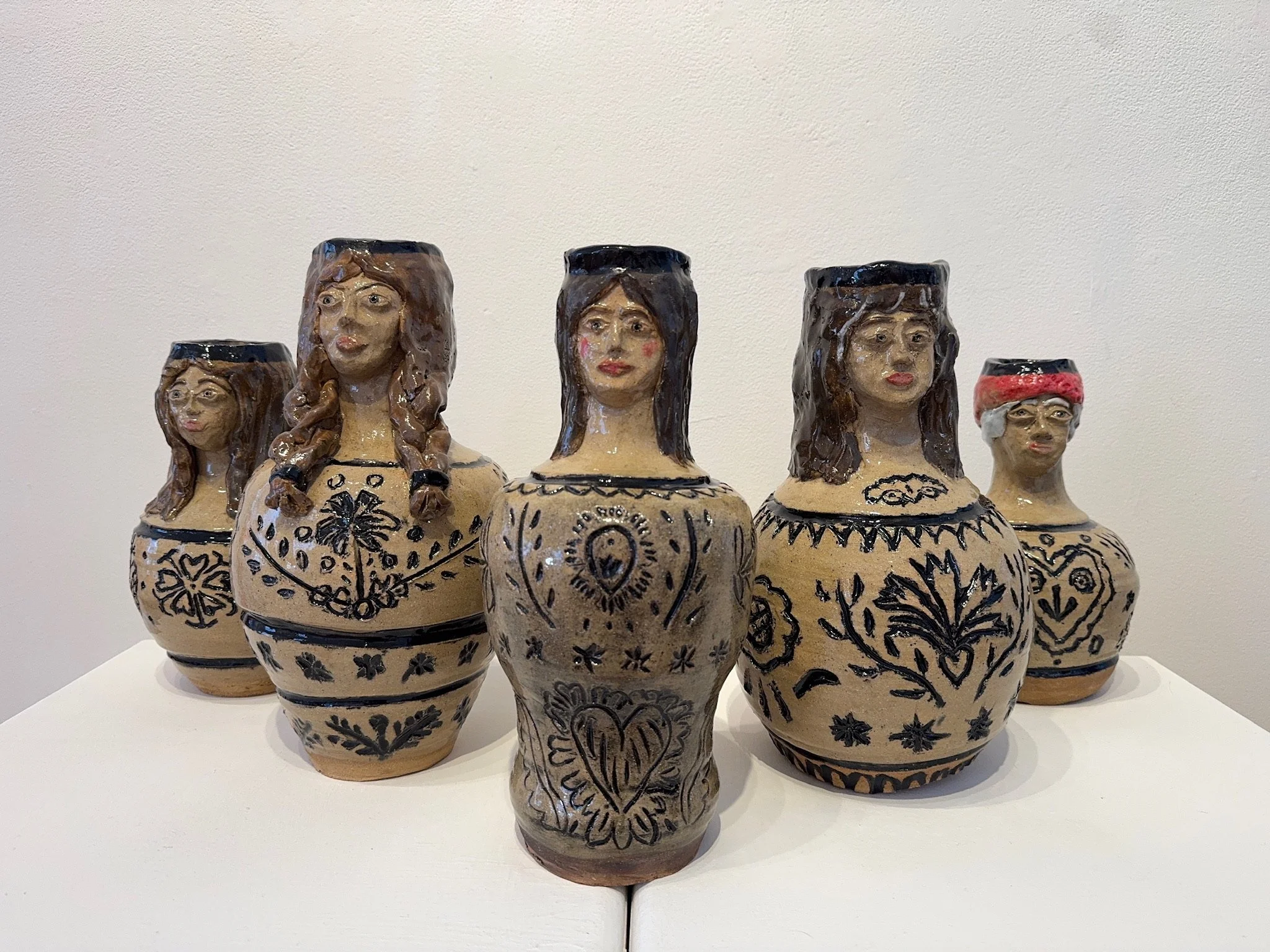
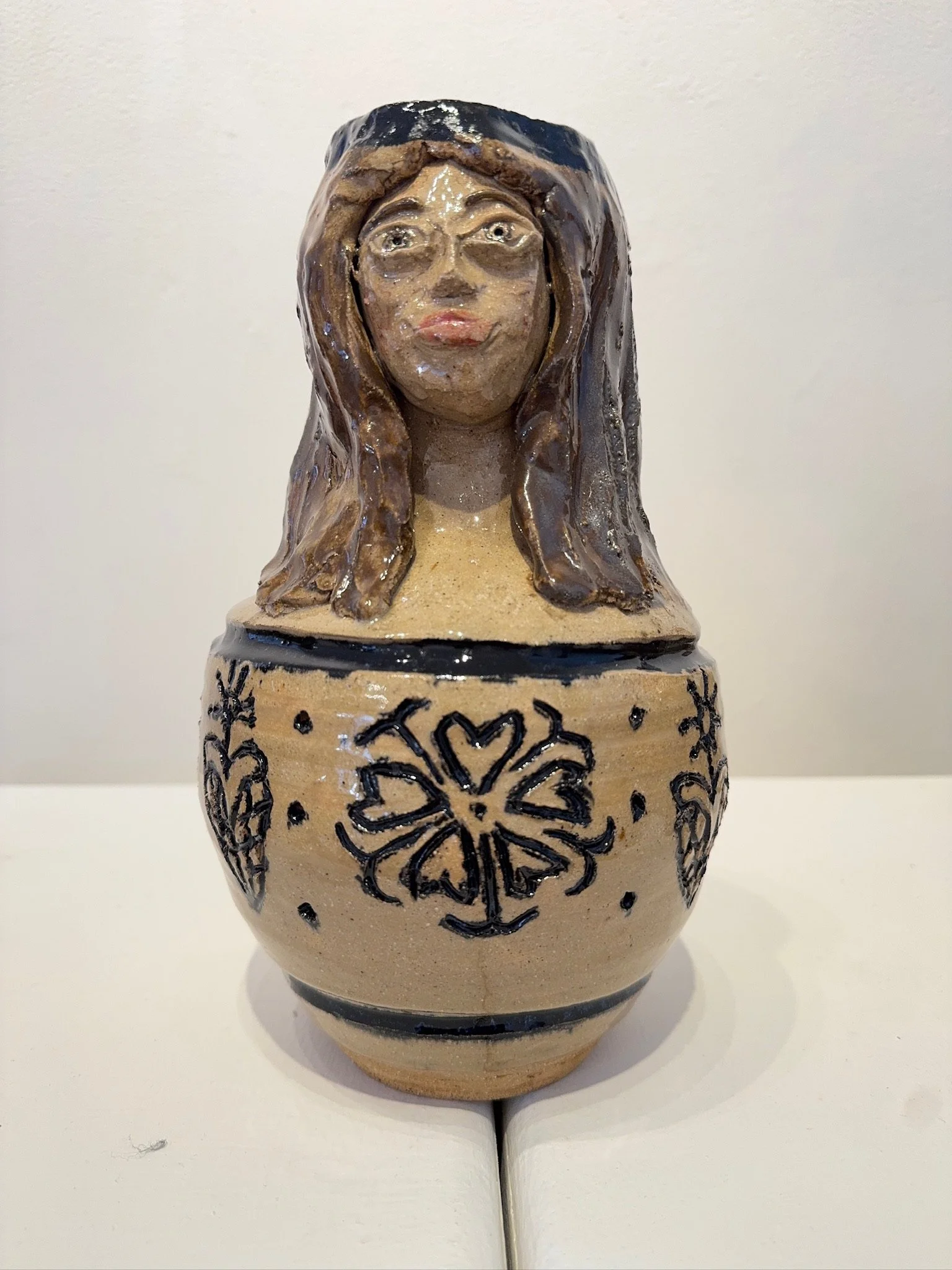
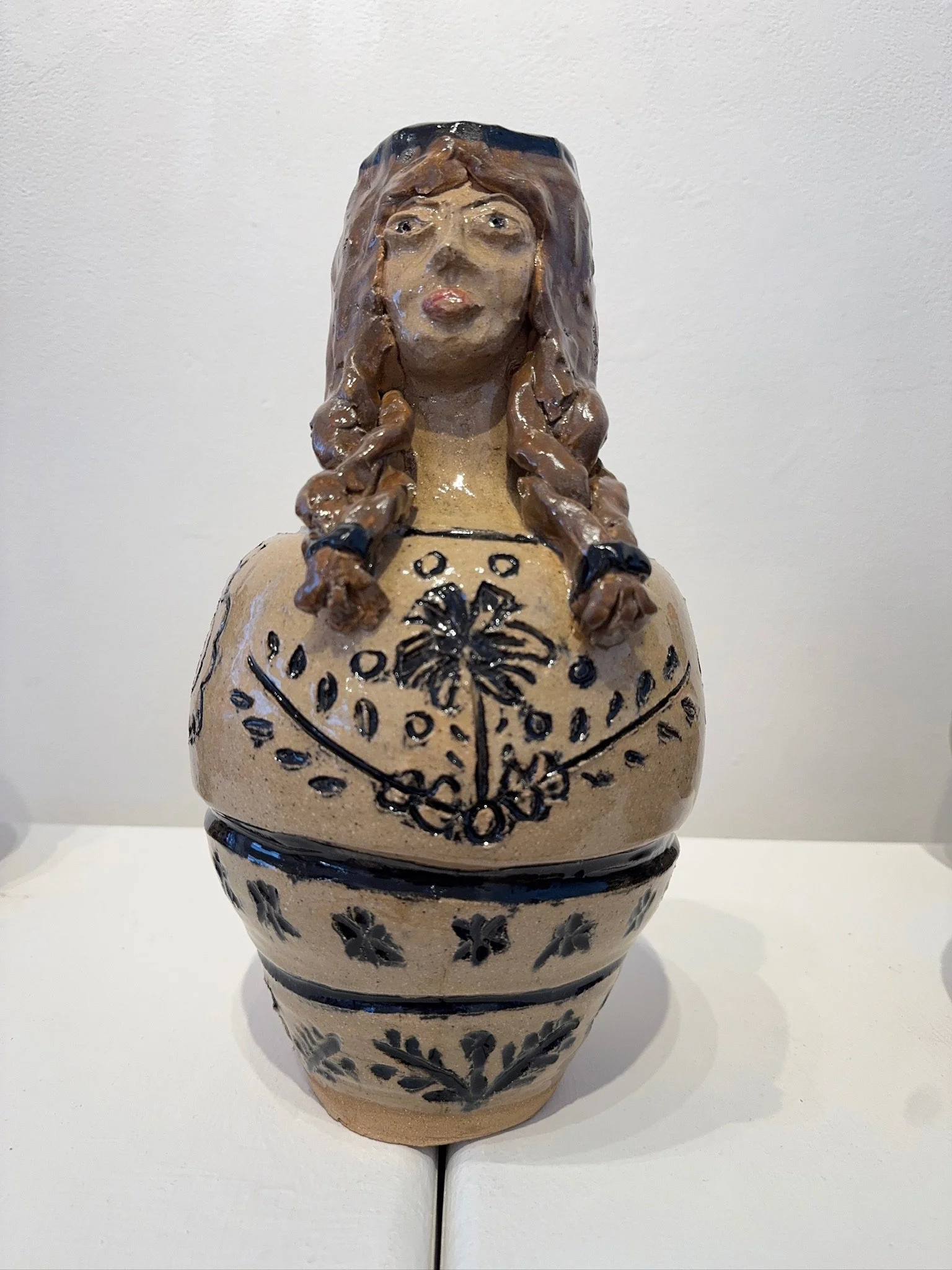
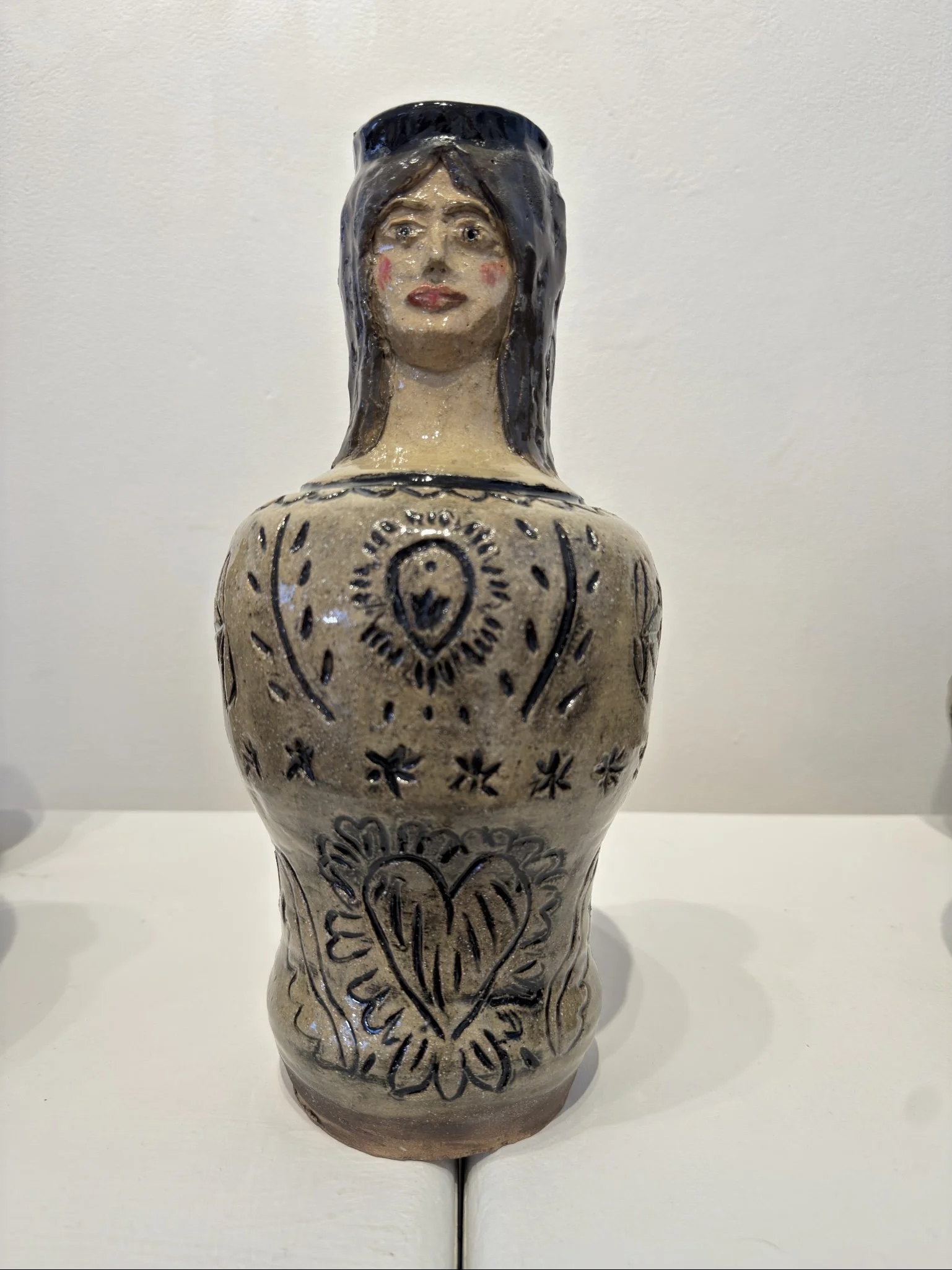
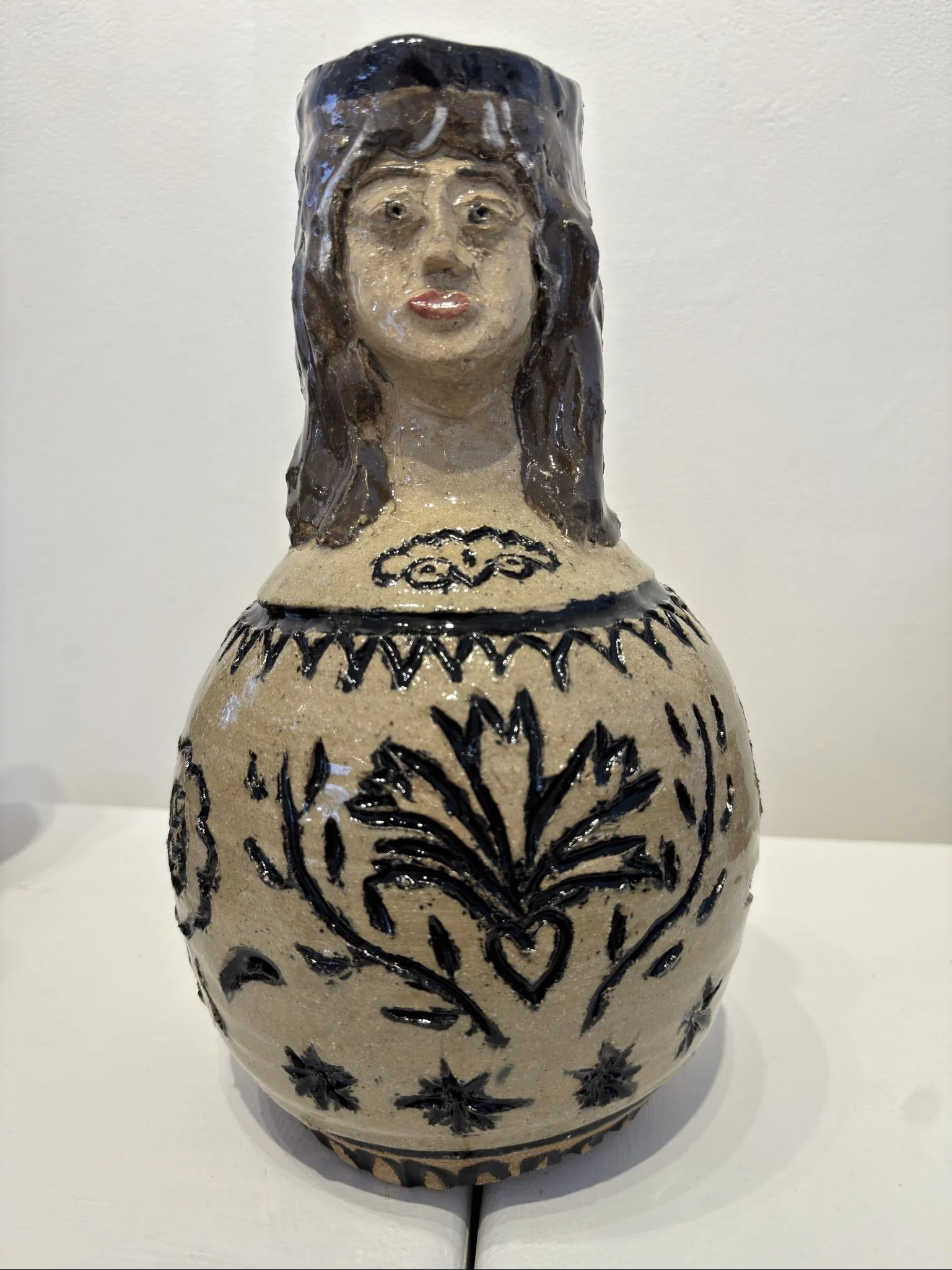
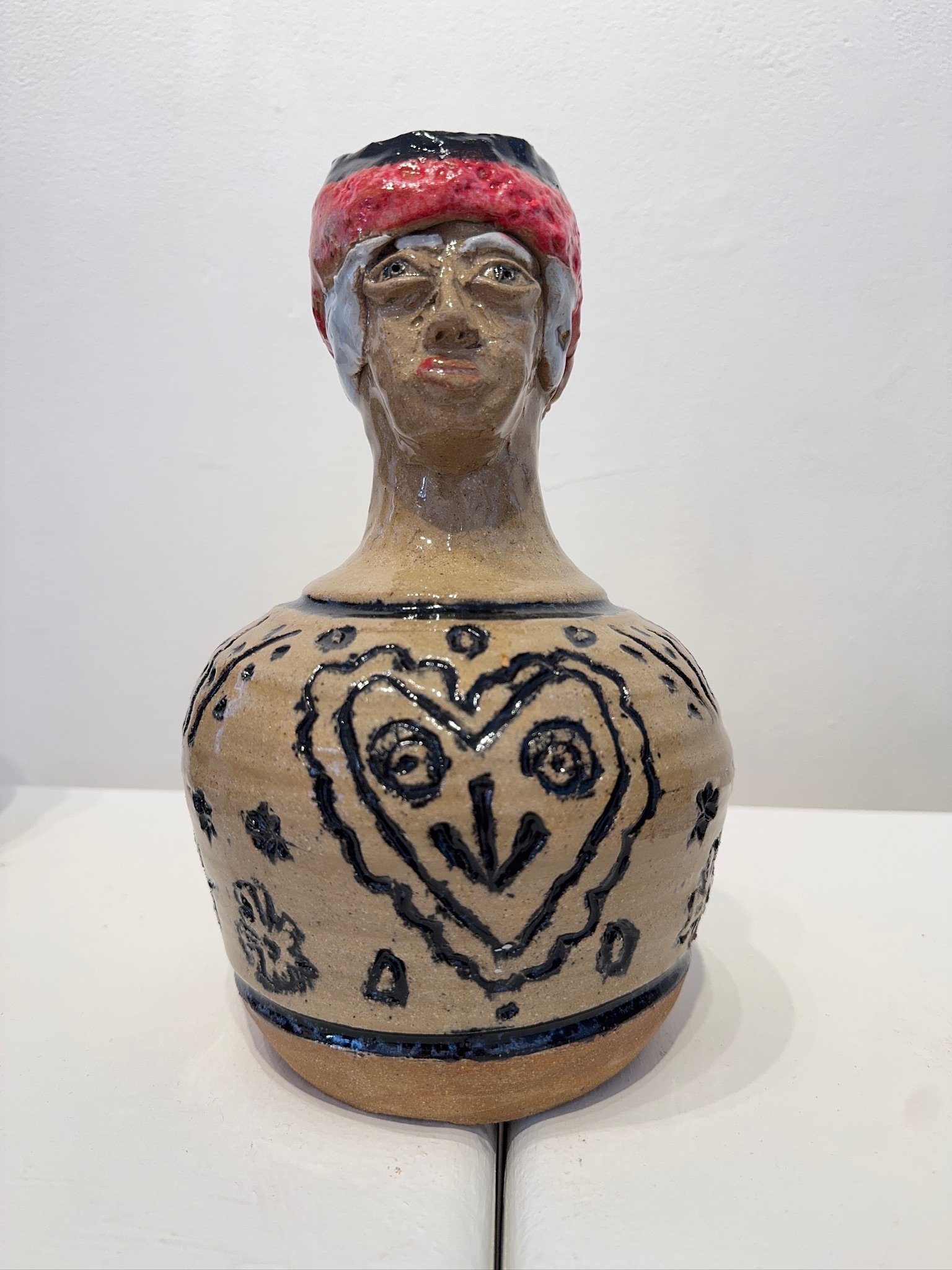
‘Peasantries’ is a series of five thrown and coil-sculpted works I made to reflect the five phases of life for women. I specifically tried to imagine what my Slovakian ancestors would have looked like. The carvings on the vases are modernized versions of traditional majolka. A lot of my art historical research examines how women are considered ‘perfect vessels’. I wanted to challenge that image in transforming it. Here are the strong women I inherited my genes from - the space they hold is not empty, but made for a purpose.
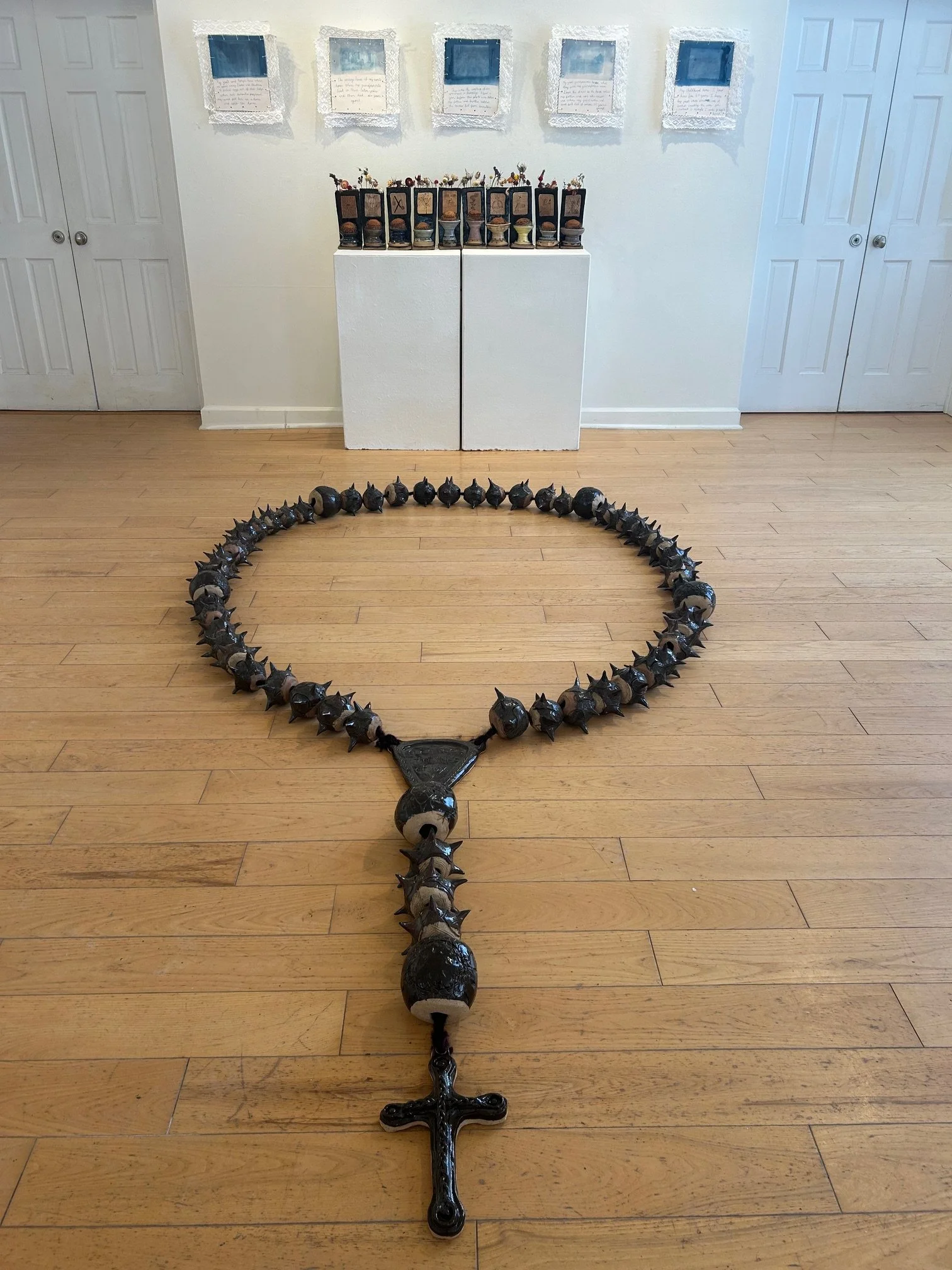
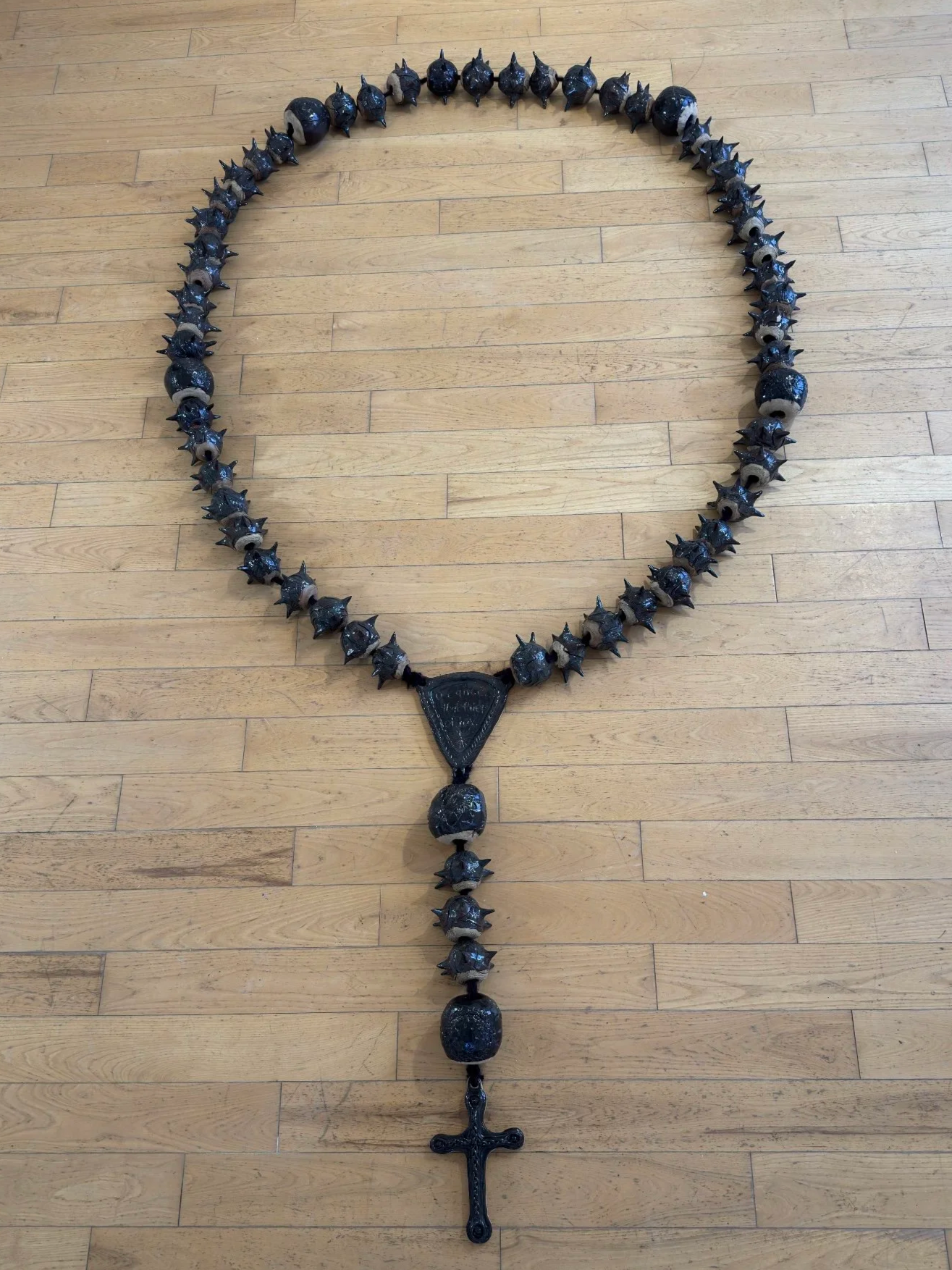
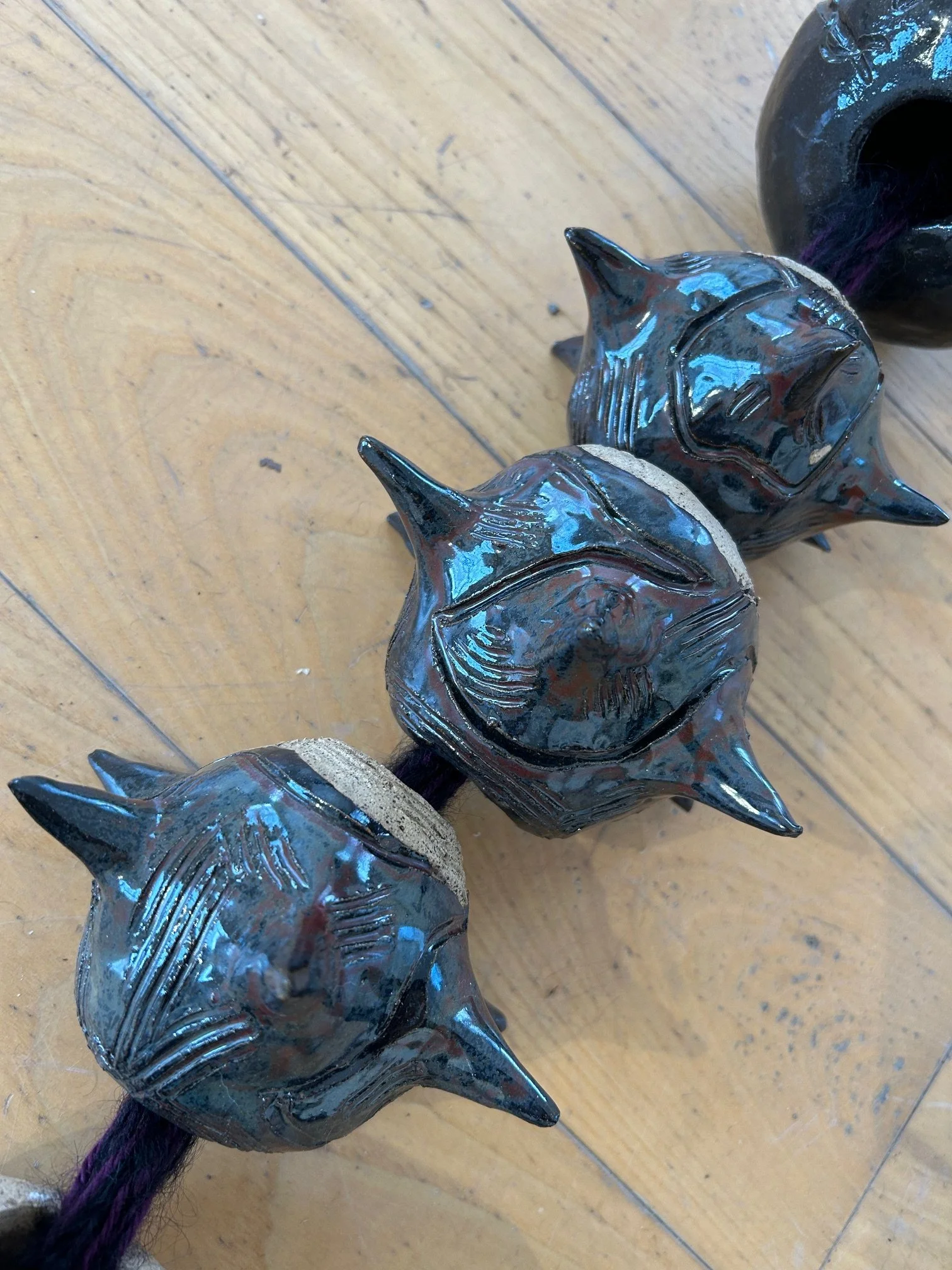
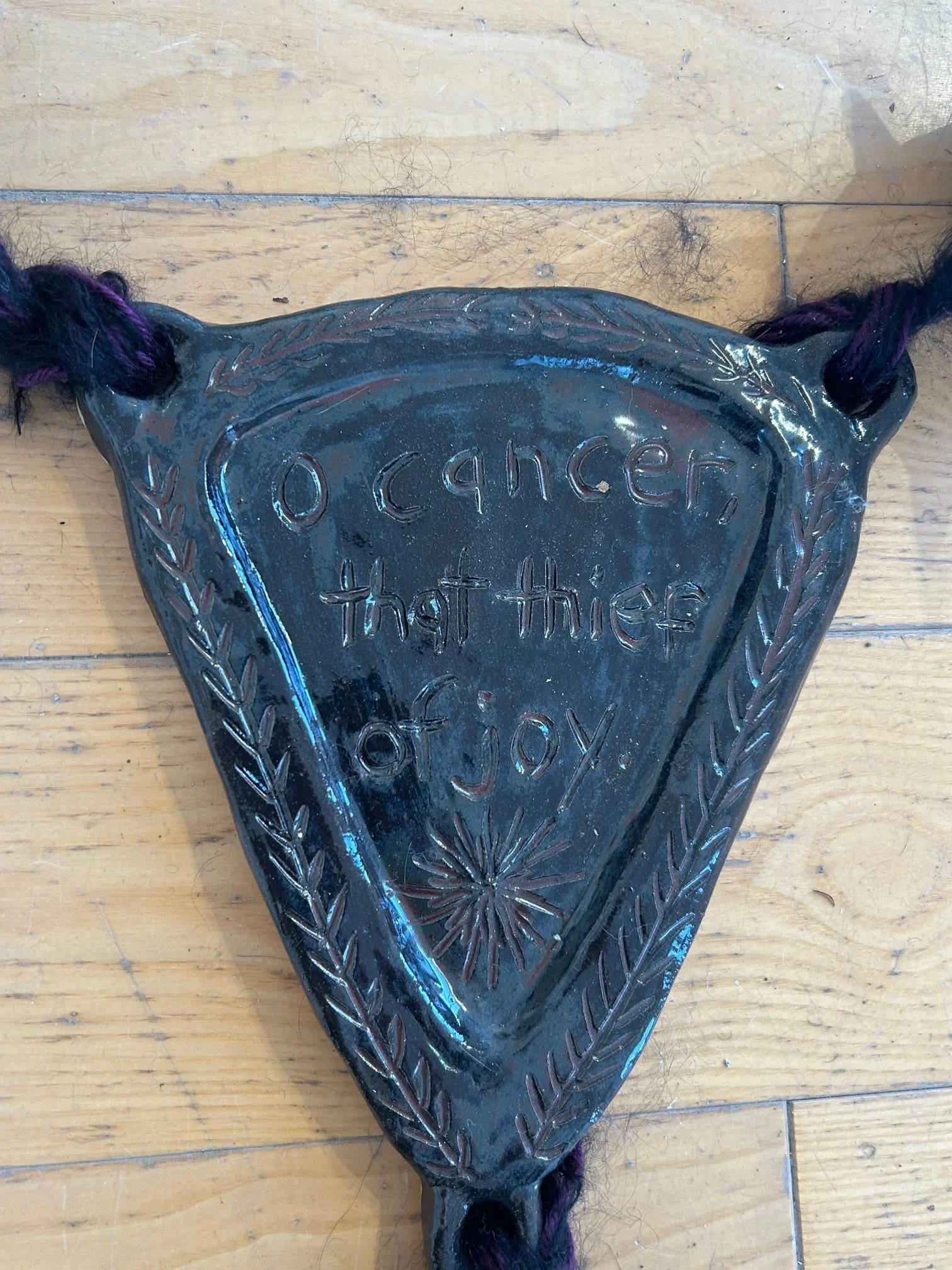
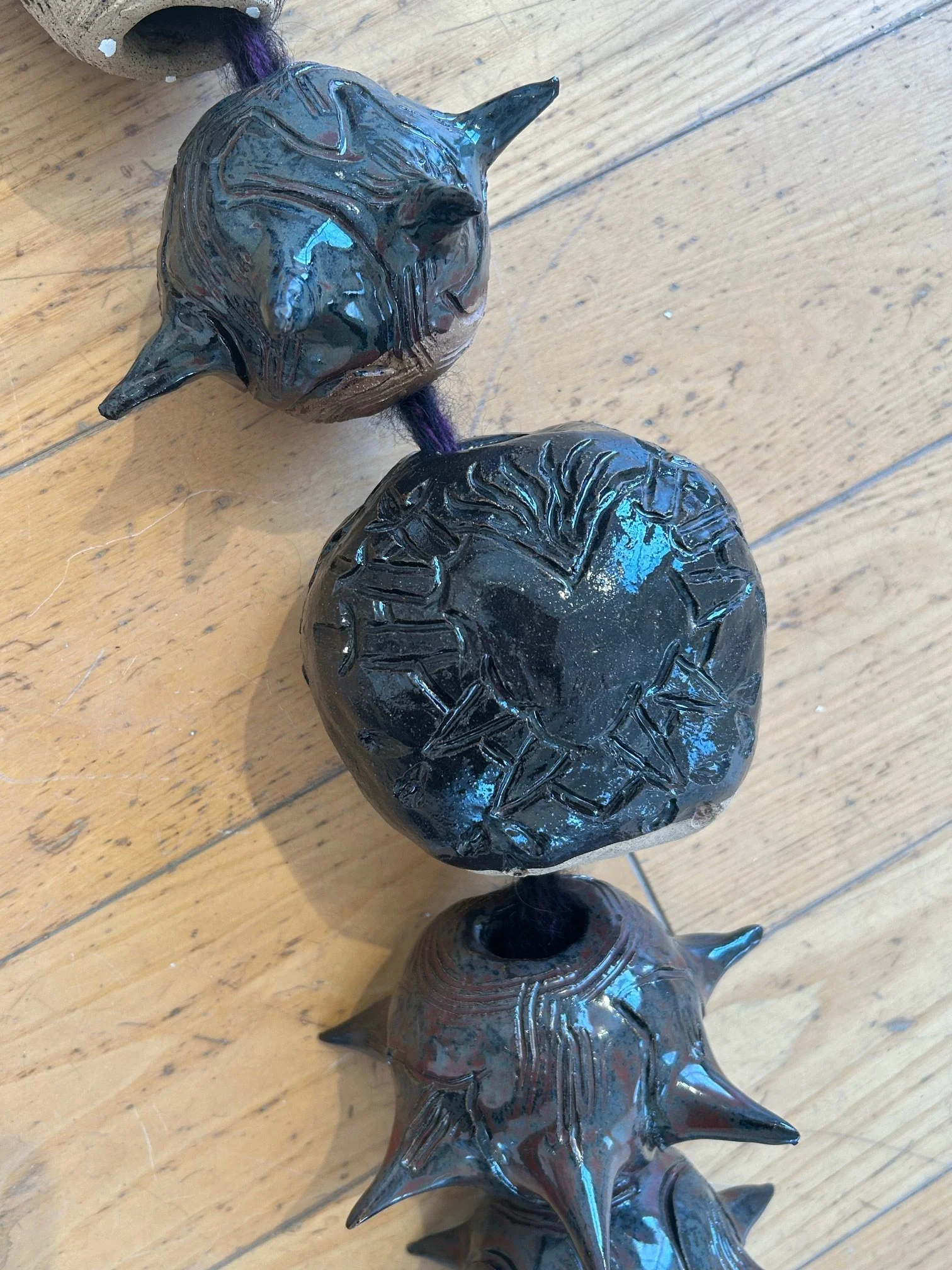
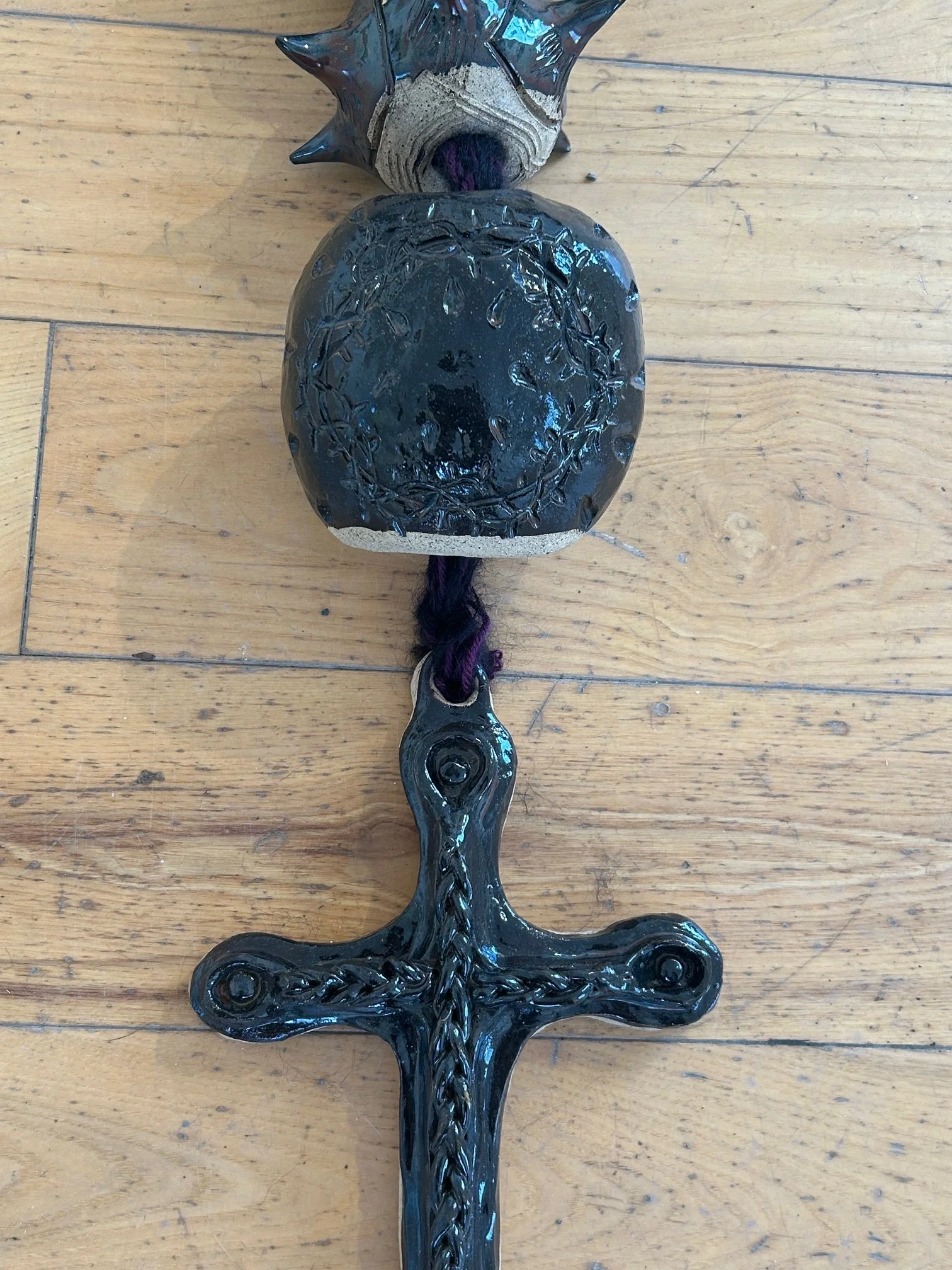
The large installation work ‘Cancer Rosary’ deals with the aftermath of my aunt’s death directly. I made this piece in the winter of 2025, and it was the only piece made for this series that was done completely outside the Oberlin College Pottery Co-Op.
I deal with religion in the ‘Reliquaries’ series, but this work is more head on; I first began thinking of this piece when at my aunt’s funeral service, the pastor gave a fire-and-brimstone speech, effectively using her death as an opportunity to evangelize us. It was very uncomfortable and I couldn’t stop thinking about how at the end of her life my aunt had actually been more interested in Buddhist thought than any realm of Christianity. Thus the rosary illuminates how religion has been used in my family as both a weapon to use as protection and an instrument of pain. Though I don’t define myself as strictly religious, I’ve recently found comfort in an accepting and forgiving Episcopalian denomination. Their approach to religion has allowed me to feel connected to my family’s history without the fear of passing on traumatic practices.
The spiked beads are meant to represent cancer cells, their forms inspired by naval mines in the Black Sea. The yarn that binds the beads together was gifted to me by my aunt the last time I visited her.
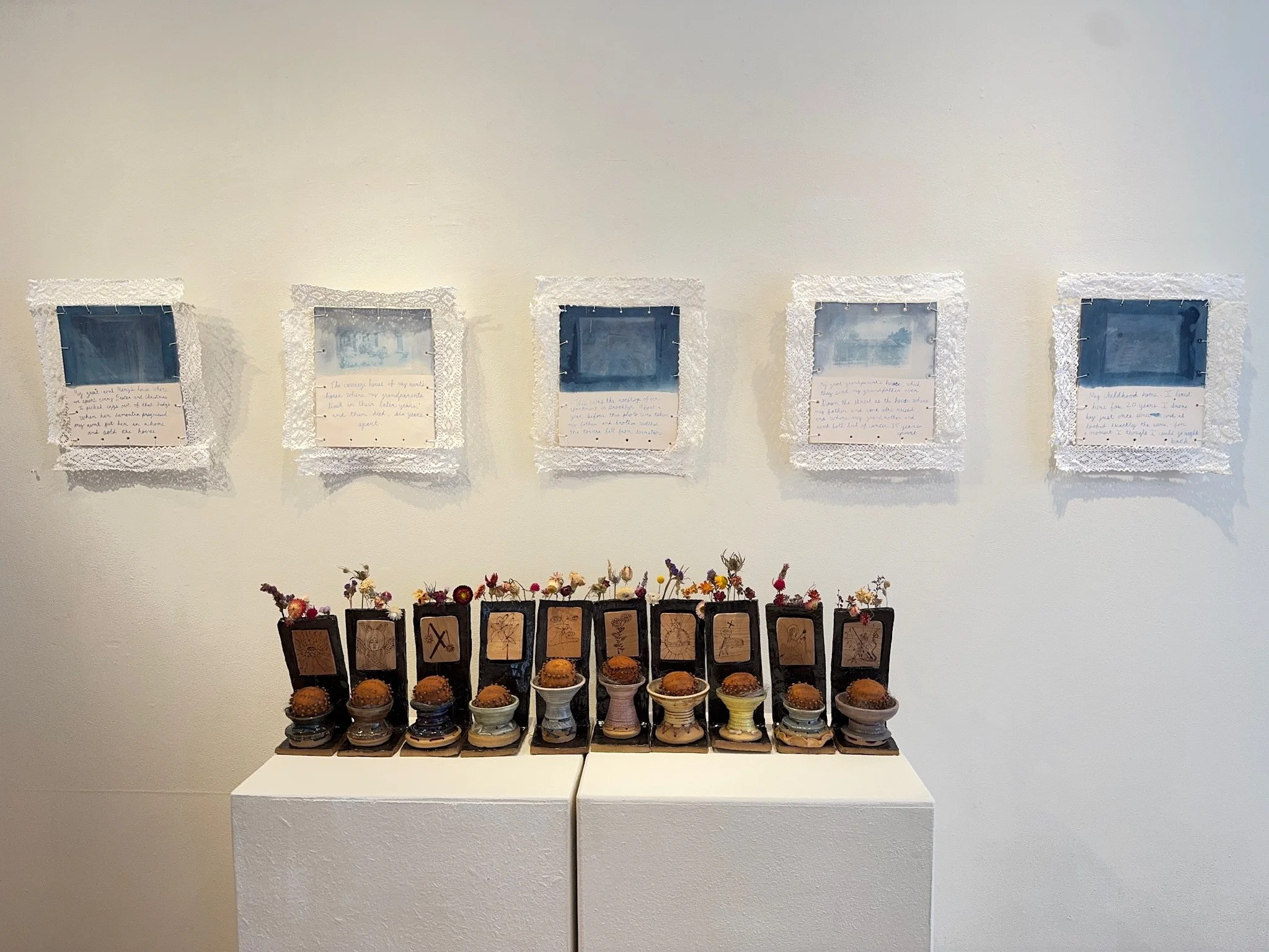
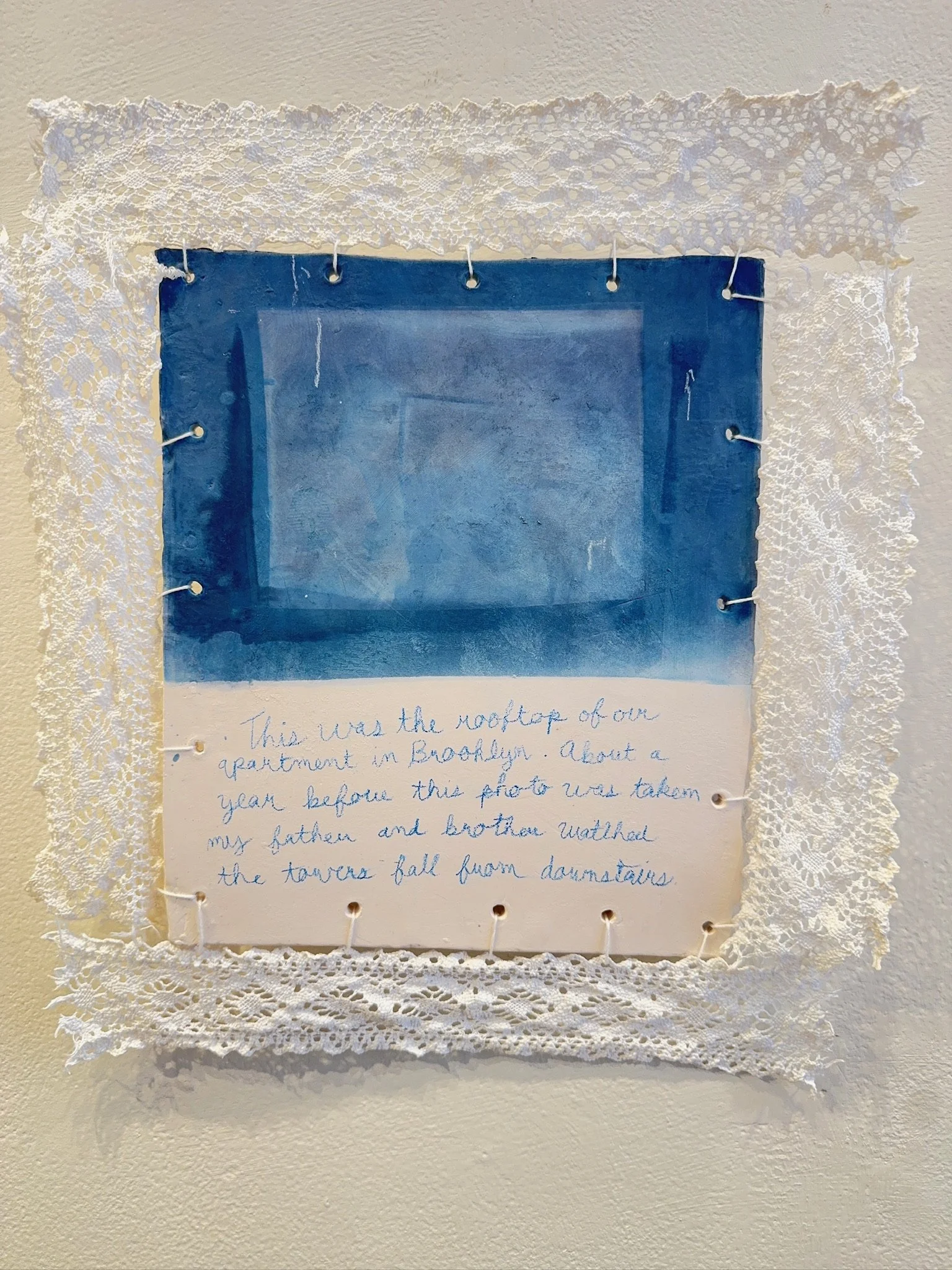
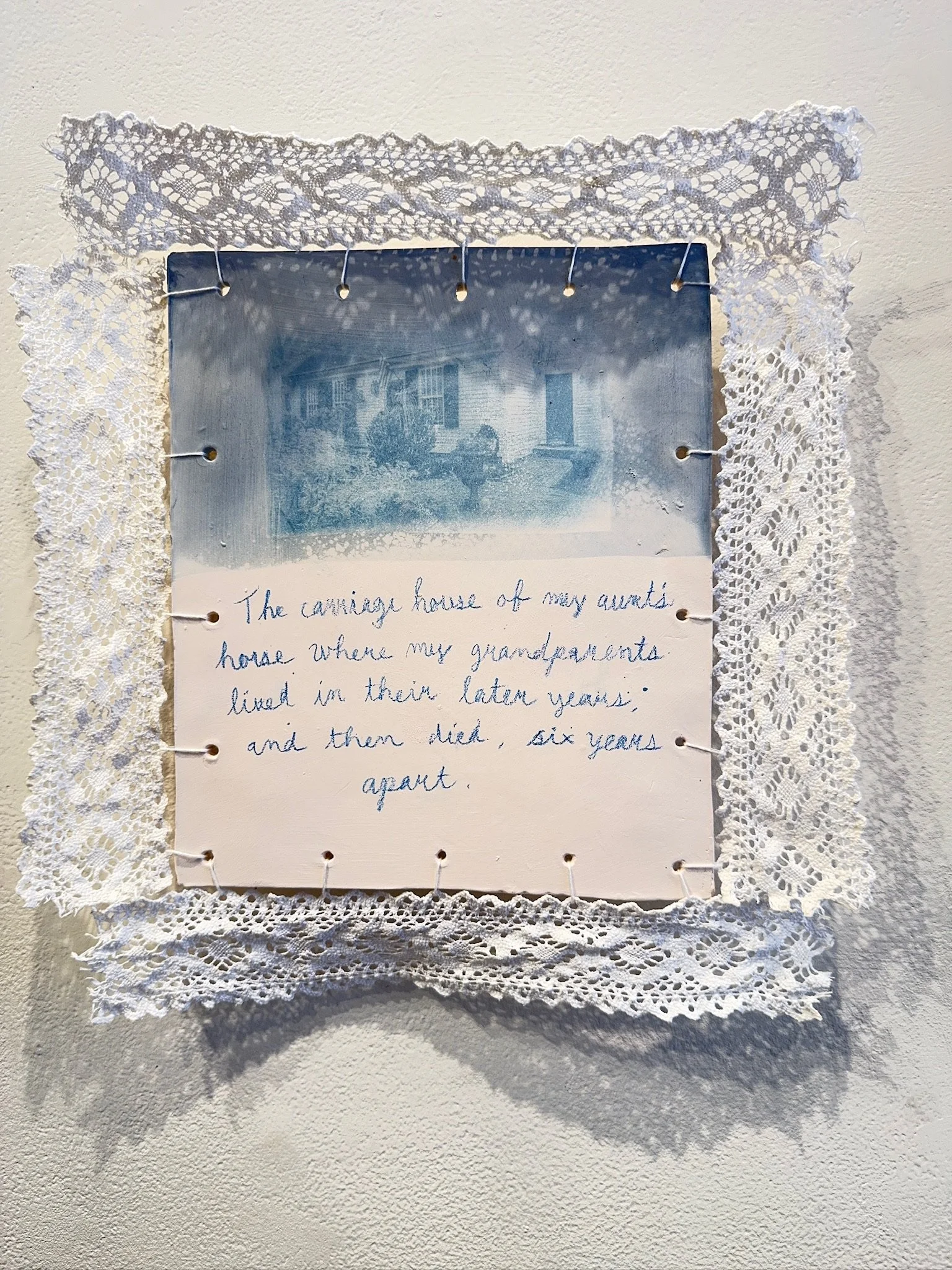
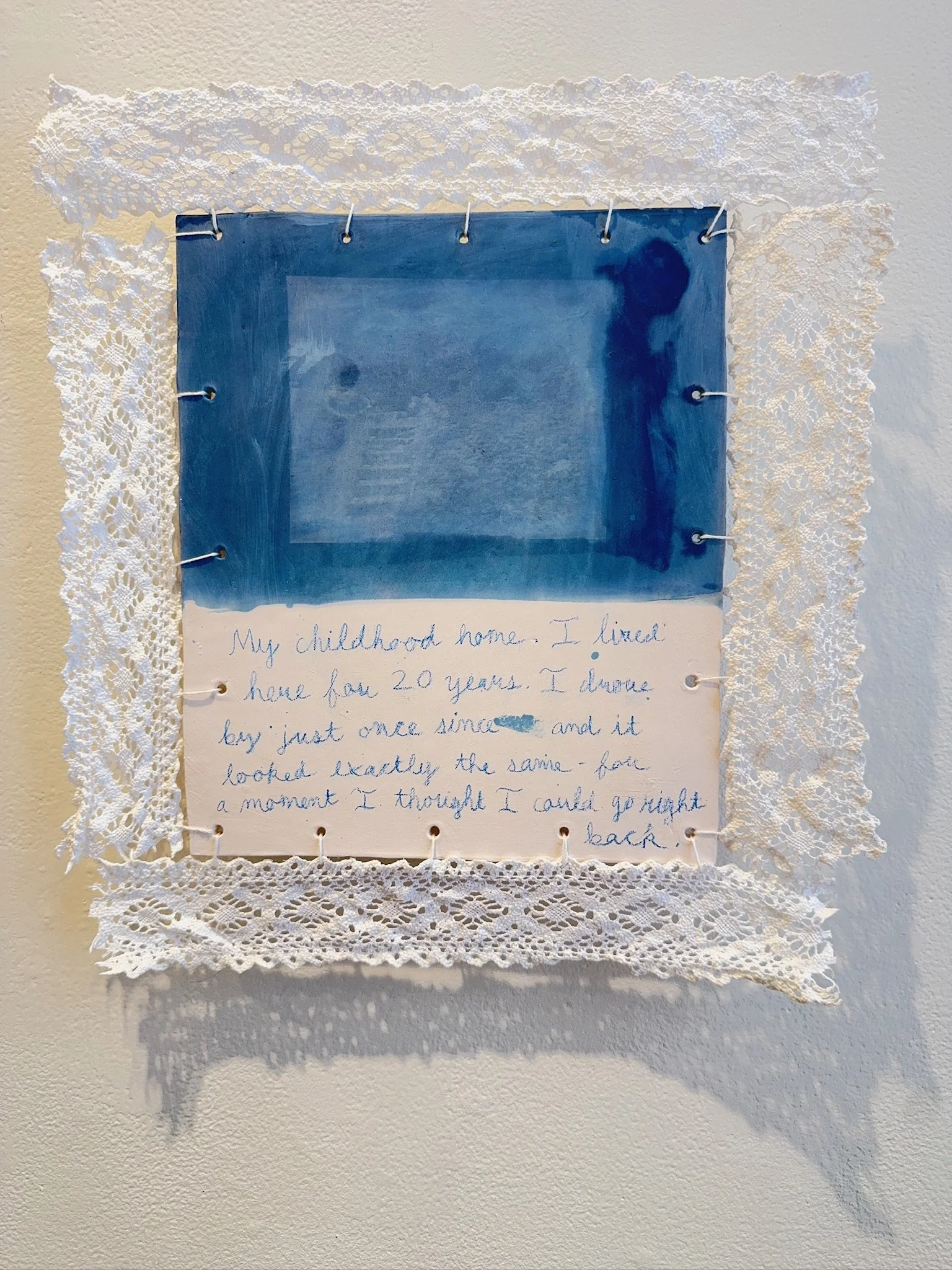
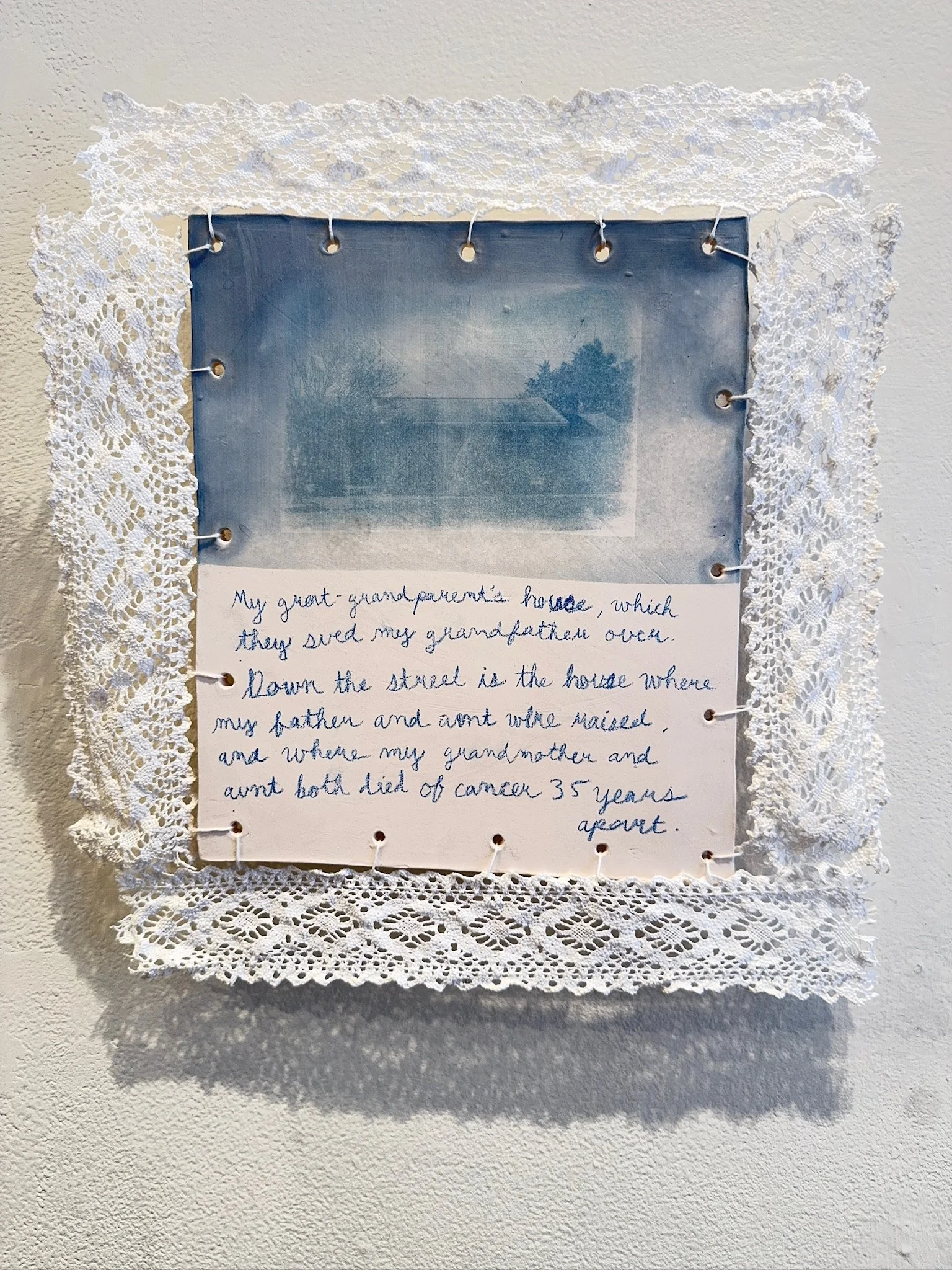
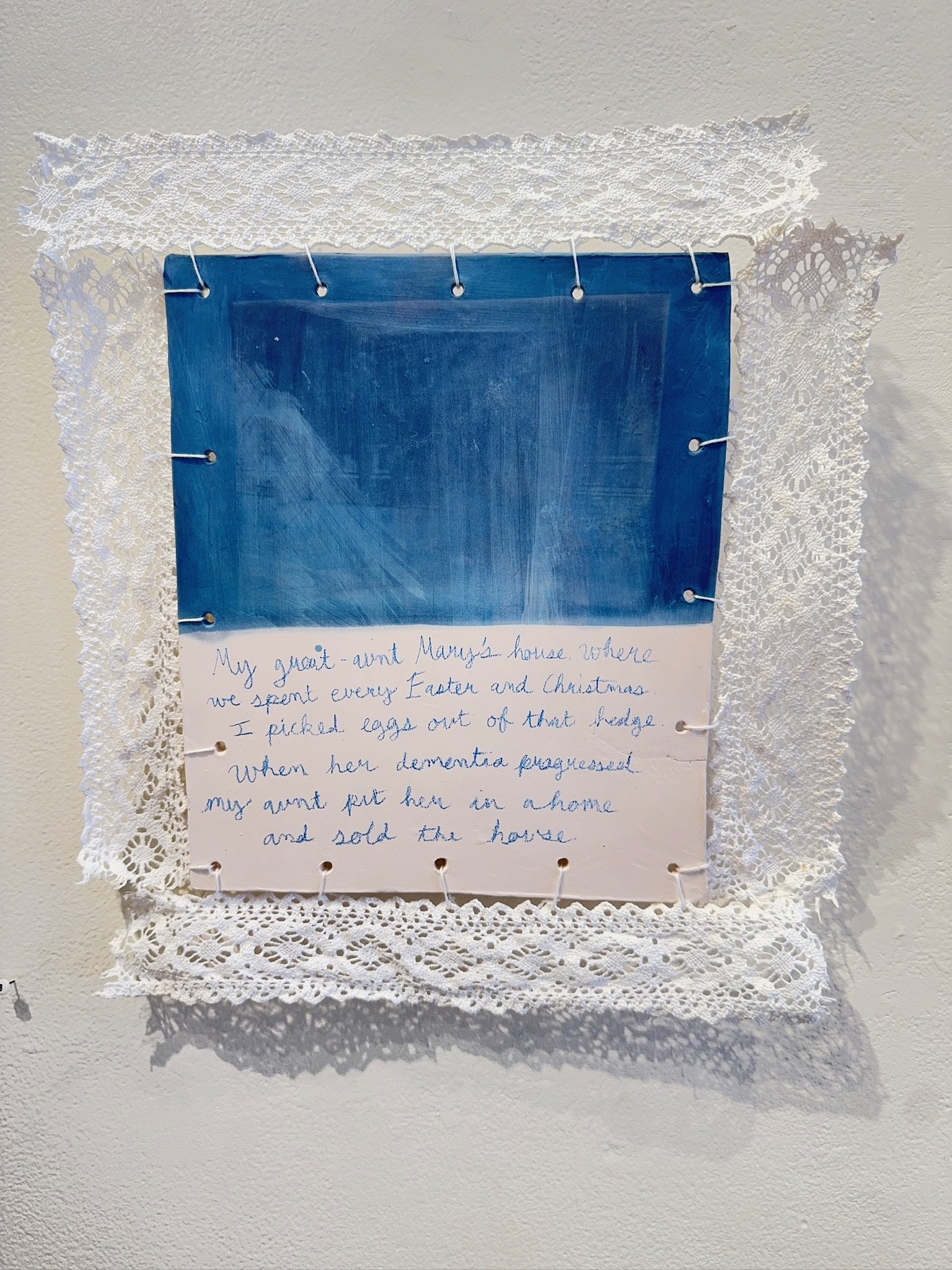
‘She’s Leaving Home, Bye, Bye’ is a series of cyanotyped bisqueware slabs, edged with starched lace trim and written on with blue underglaze pencil. Each image examines a house that holds personal significance to me or my family that we can no longer return to, because the house was sold, sued over, or physically burned to the ground.
As cyanotype is rarely right the first time, and ceramics is a time-intensive craft, it was frustrating trying to get them to join in a successful way. However I found that even though some images were obscured, this spoke to the way that memory works, warping and fading certain images.
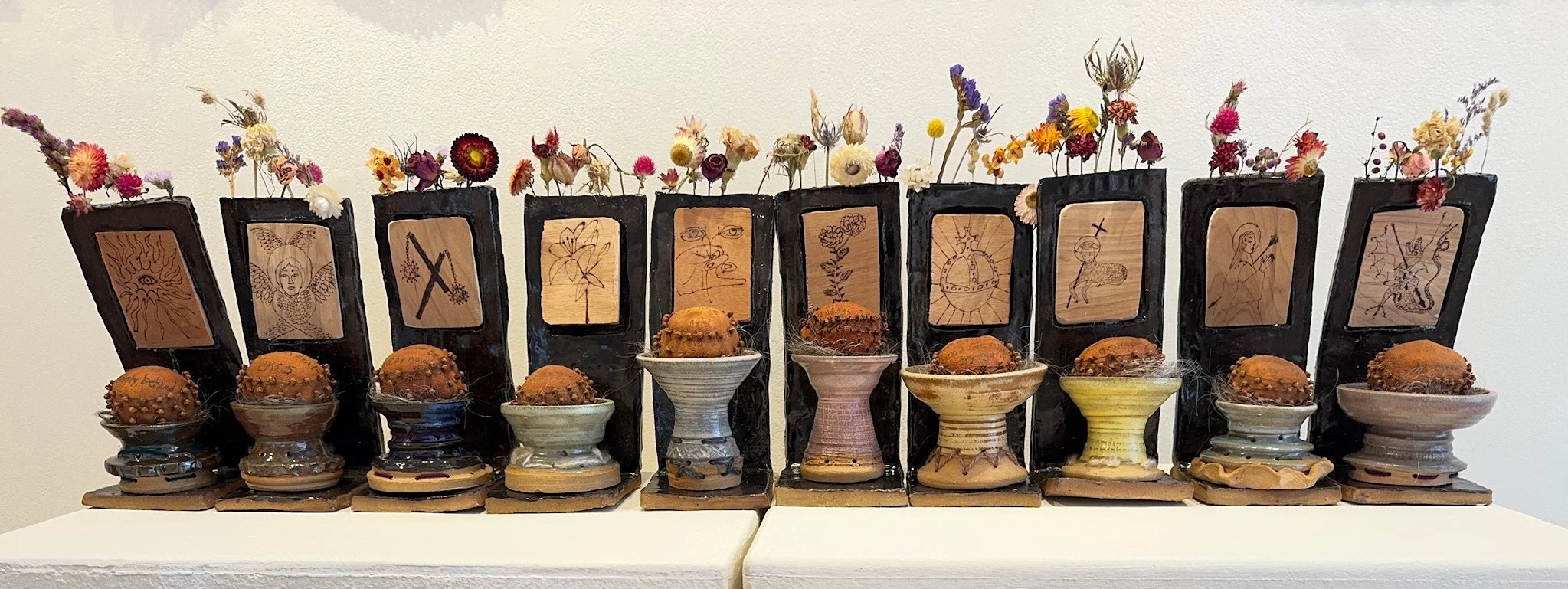
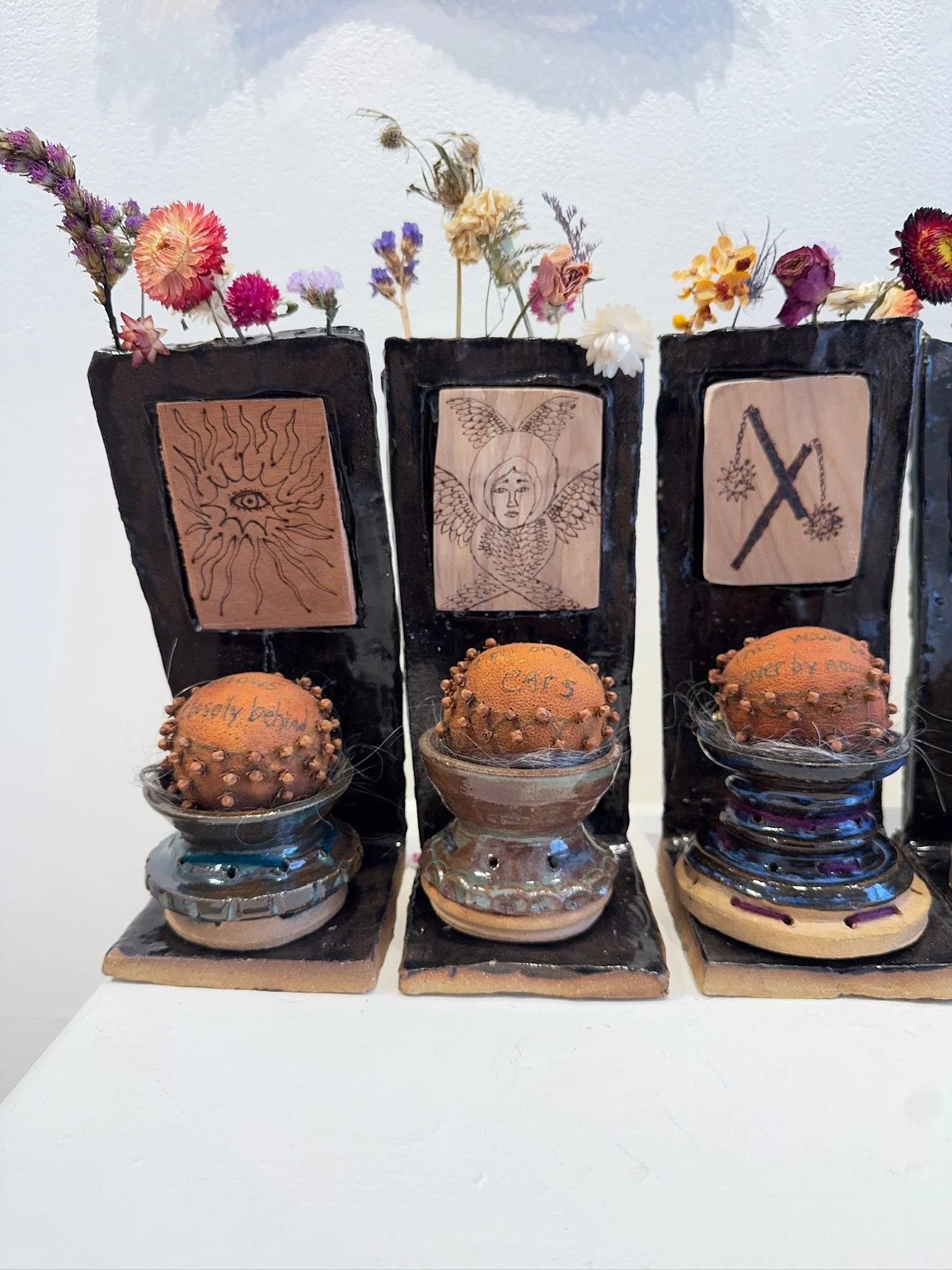
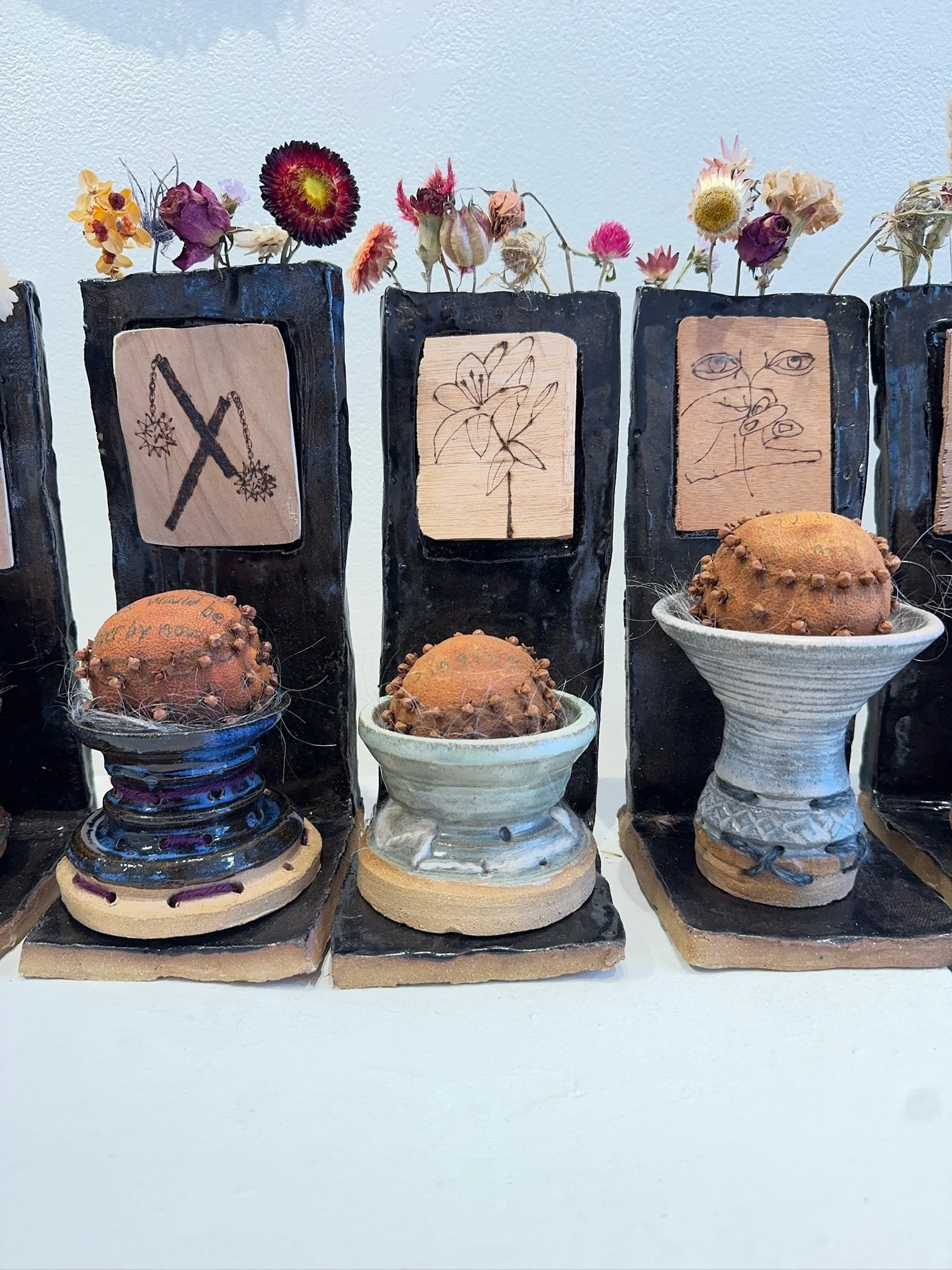
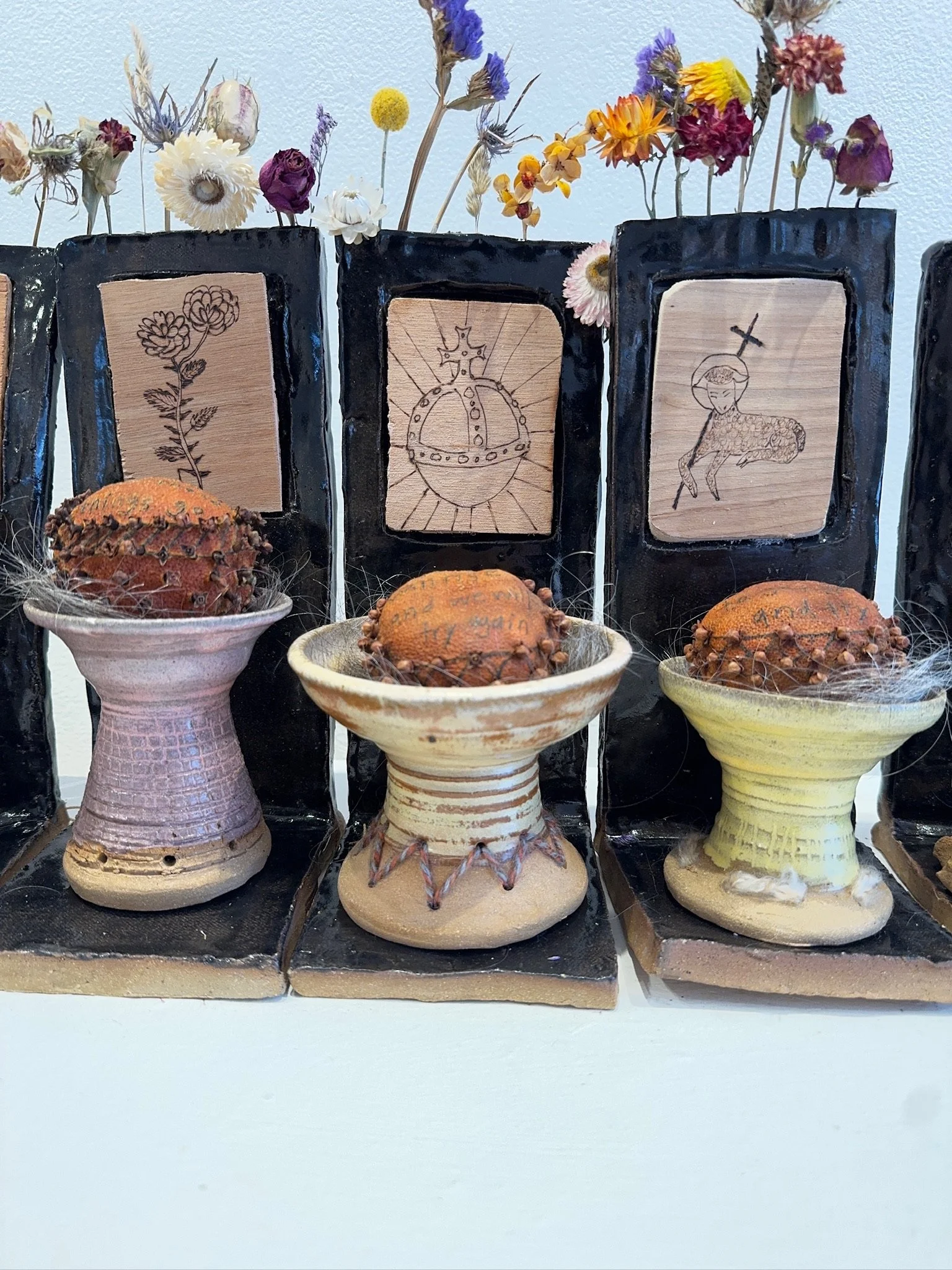
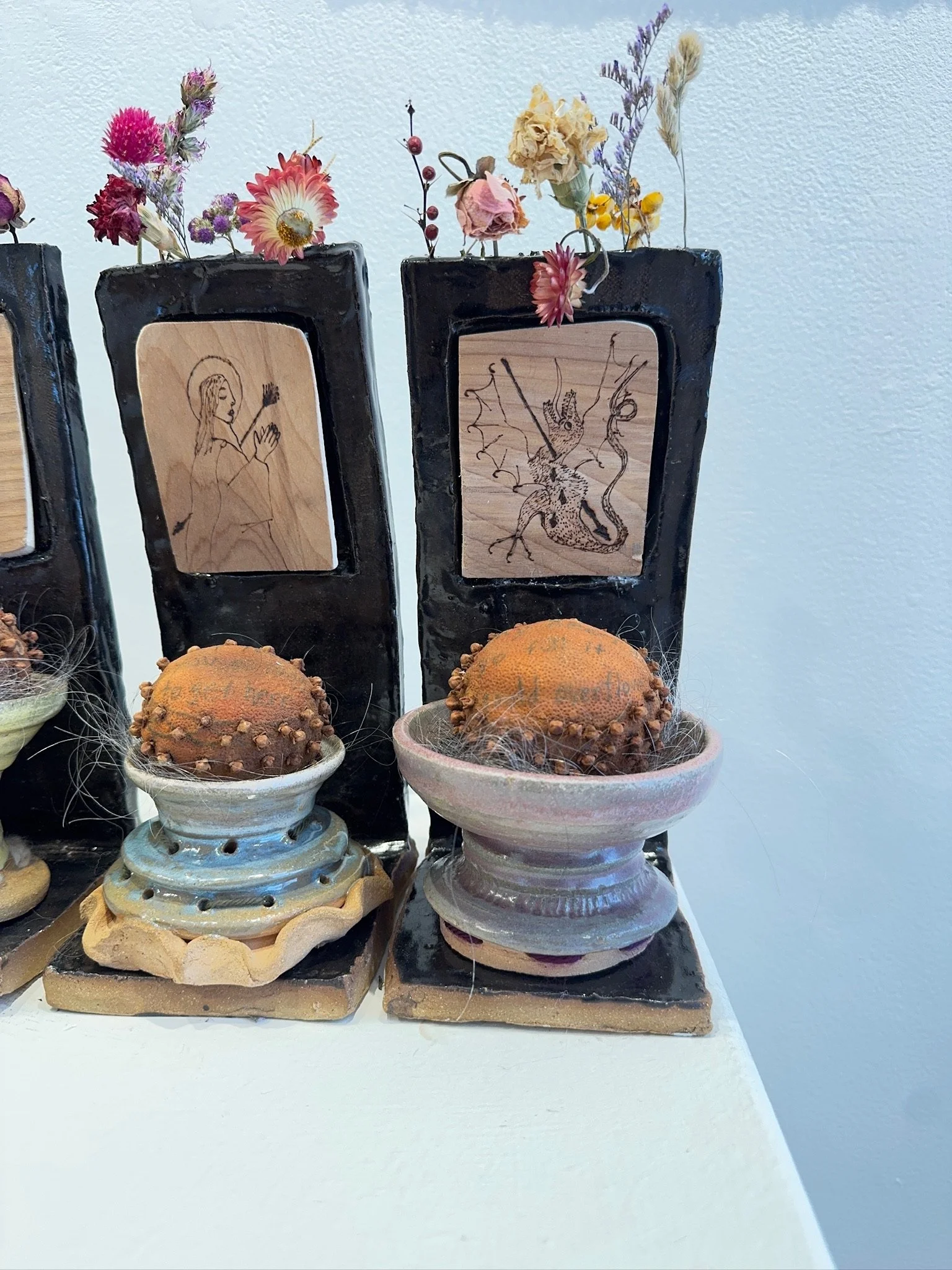
In ‘Reliquaries’ I wanted to examine how the personal can almost become holy, transformed in its memorialization. I created pomander oranges that I then tattooed with mantras that have followed me throughout my adult life. I then threw stands for them with holes that I then laced through with with yarn from my aunt. I hand-built larger ceramics niches for the stands with wood inserts cut from cigar boxes that I woodburned various religious images into. I collected natural materials over the course of the year to insert into the top of the niches, and placed the pomander oranges on their stands on beds of my mother’s hair.
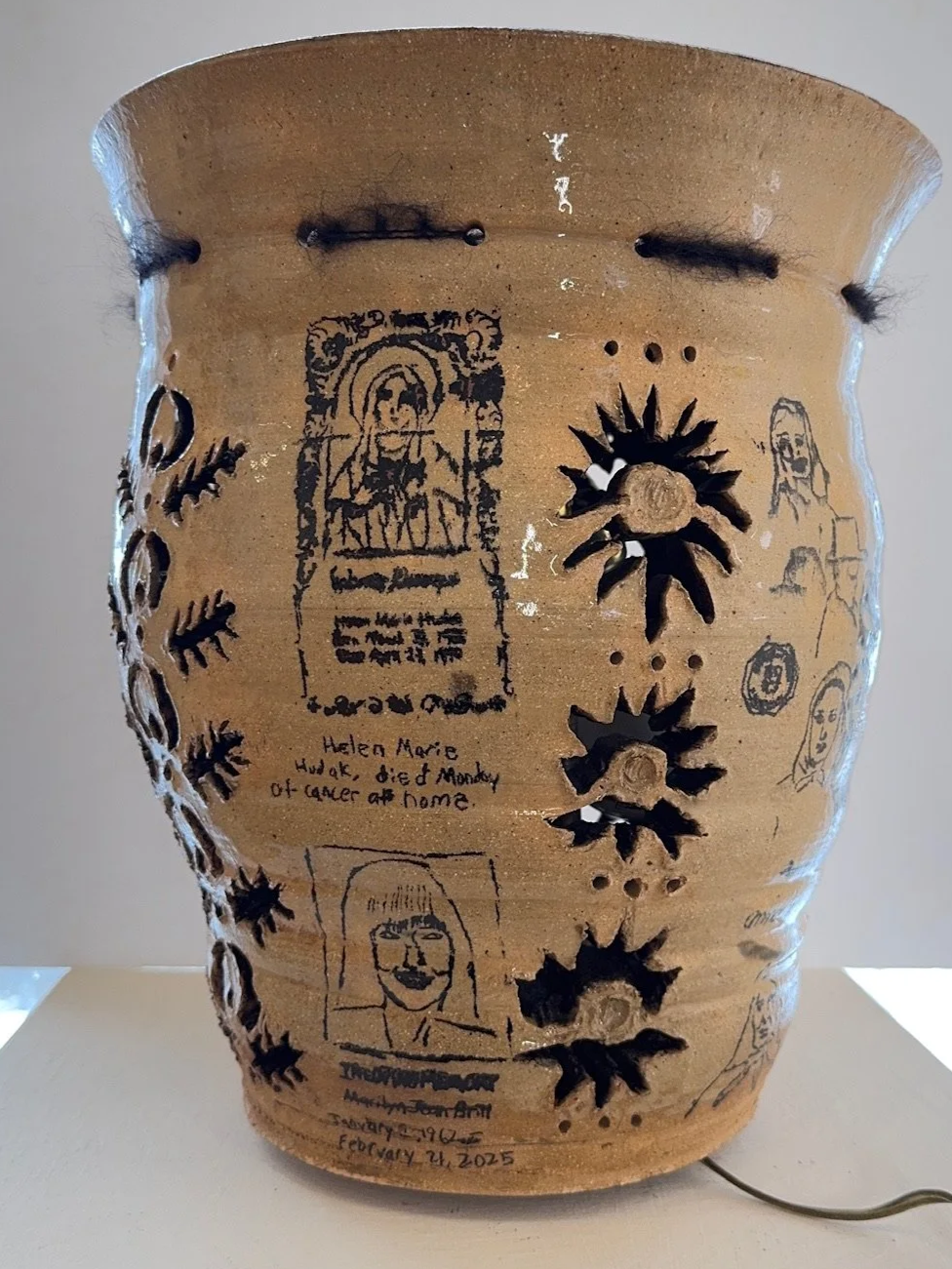
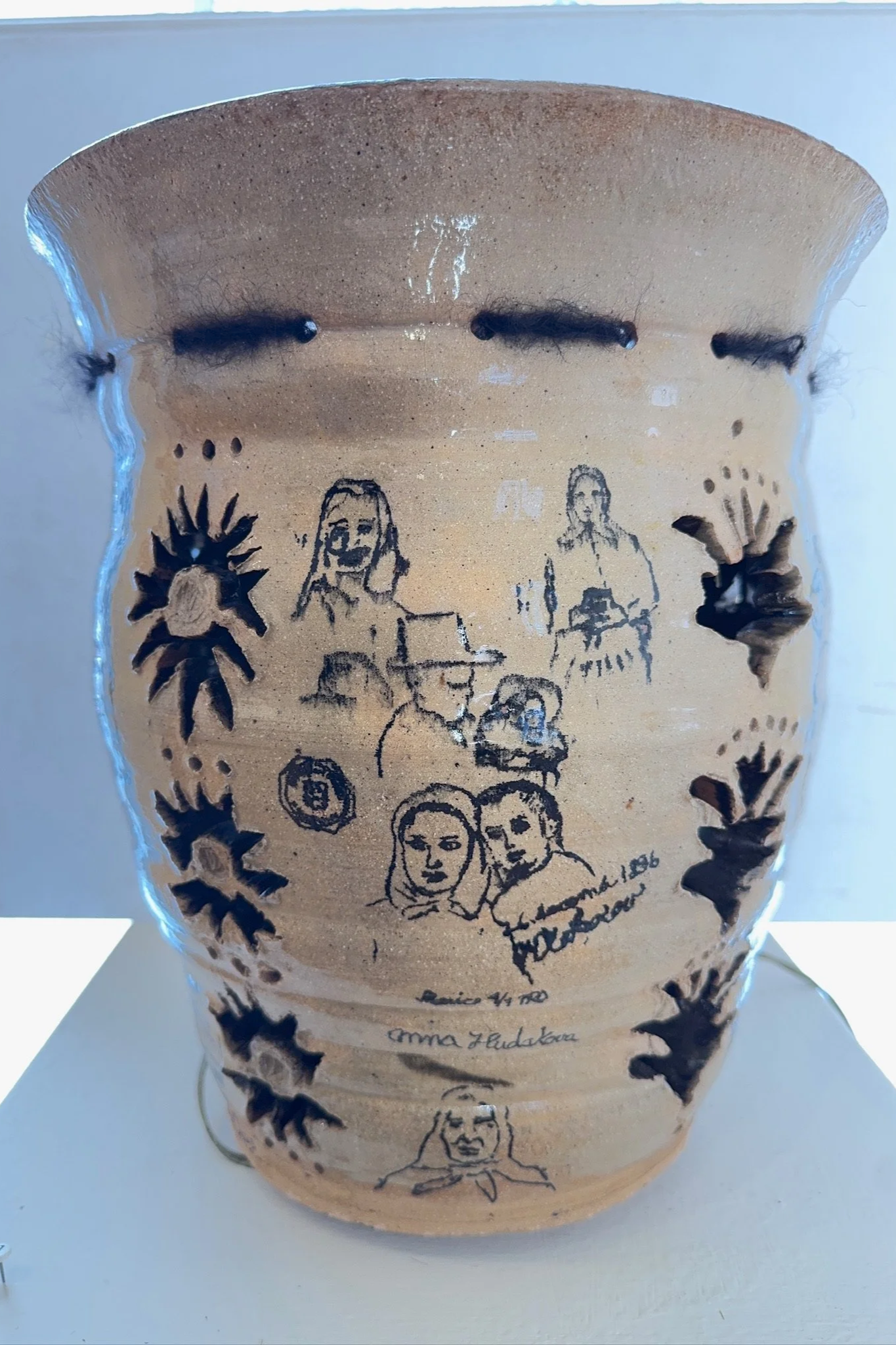
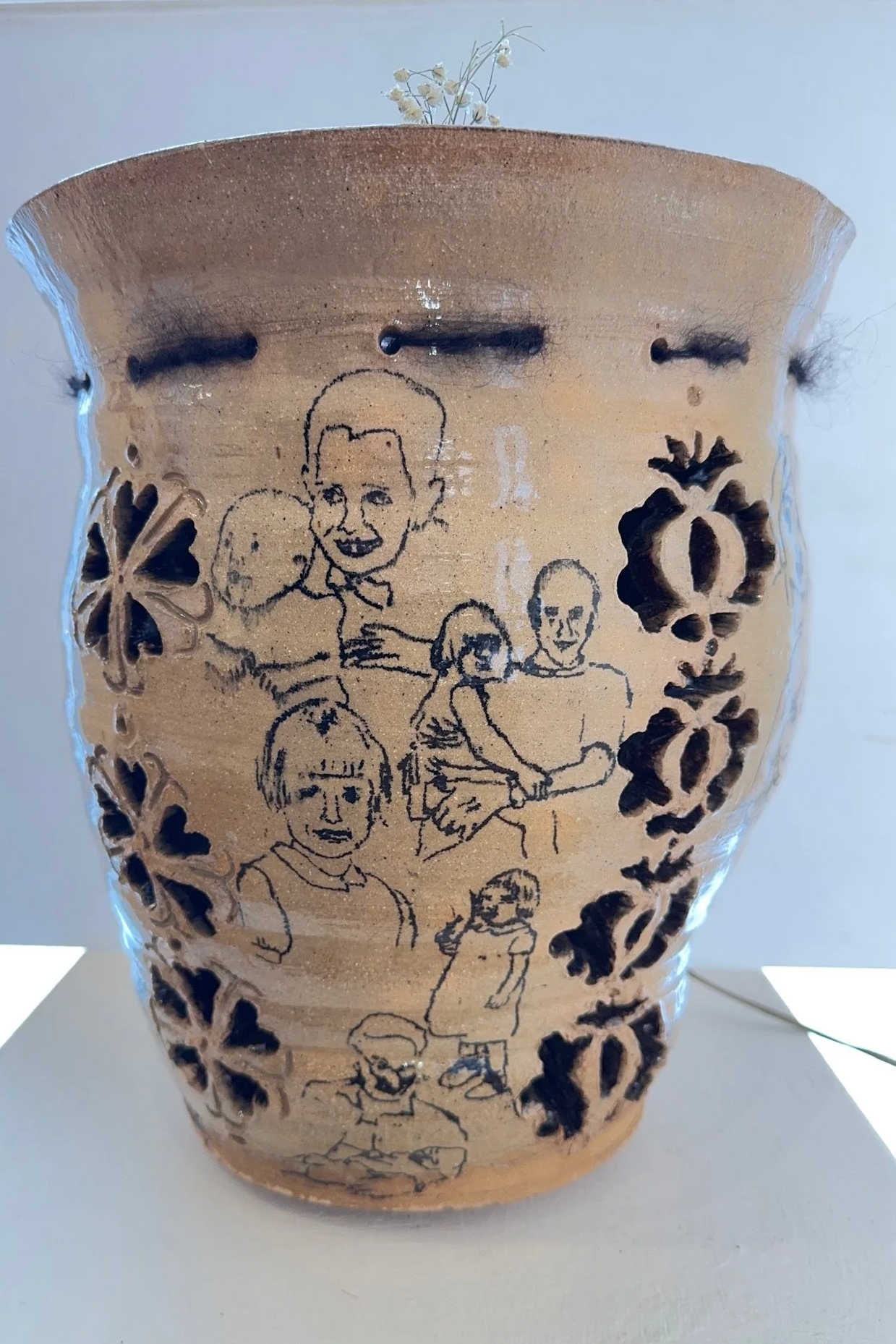
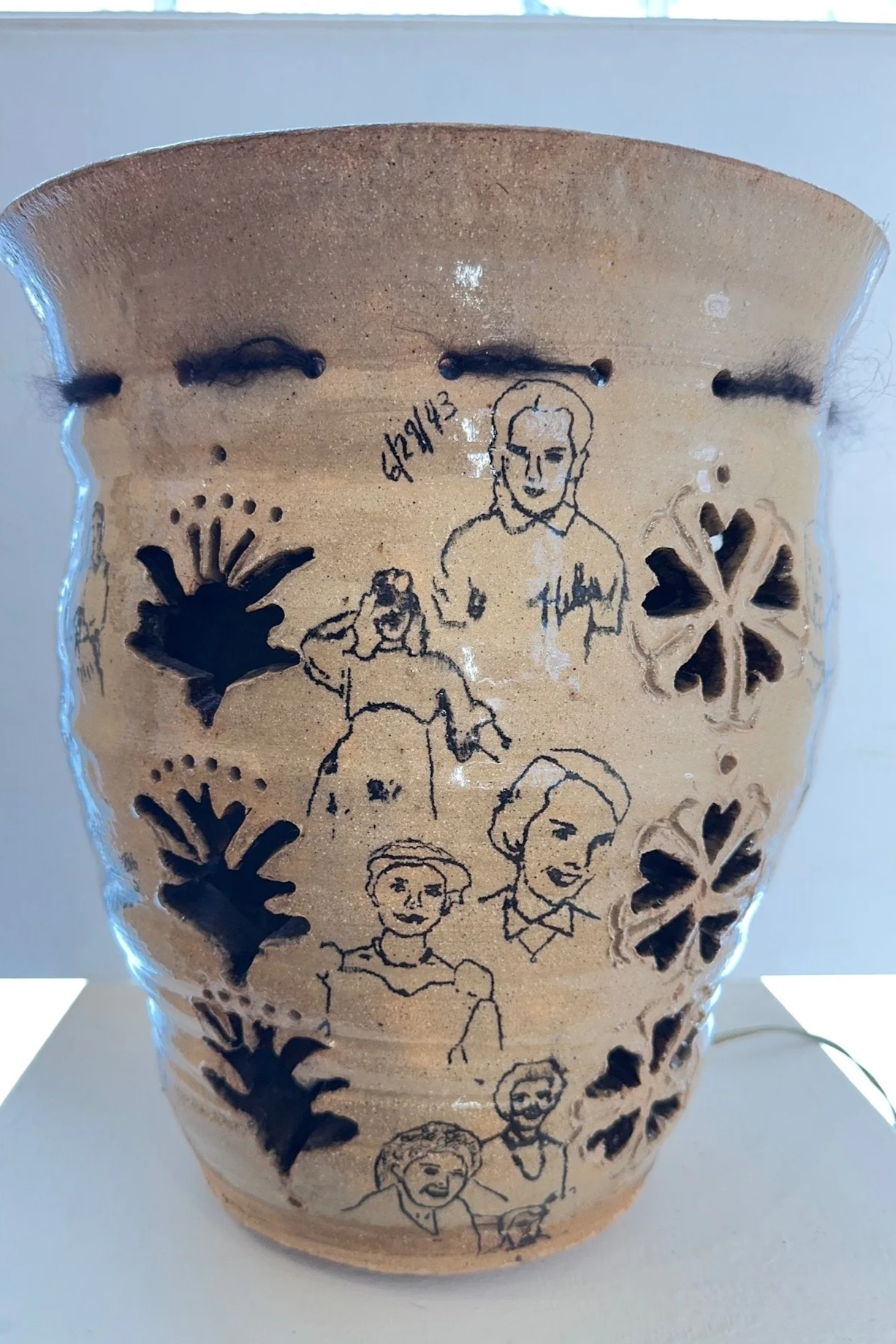
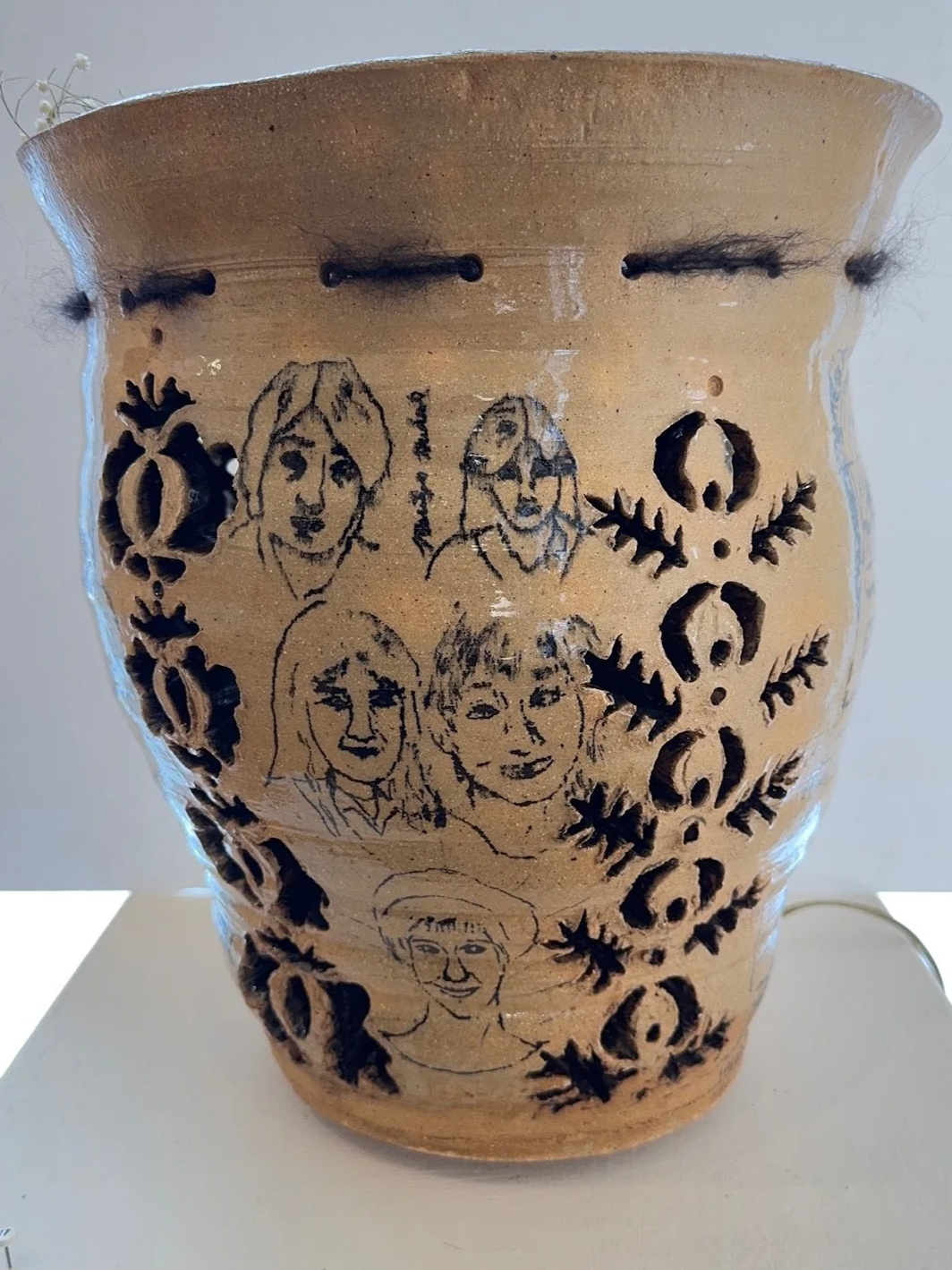
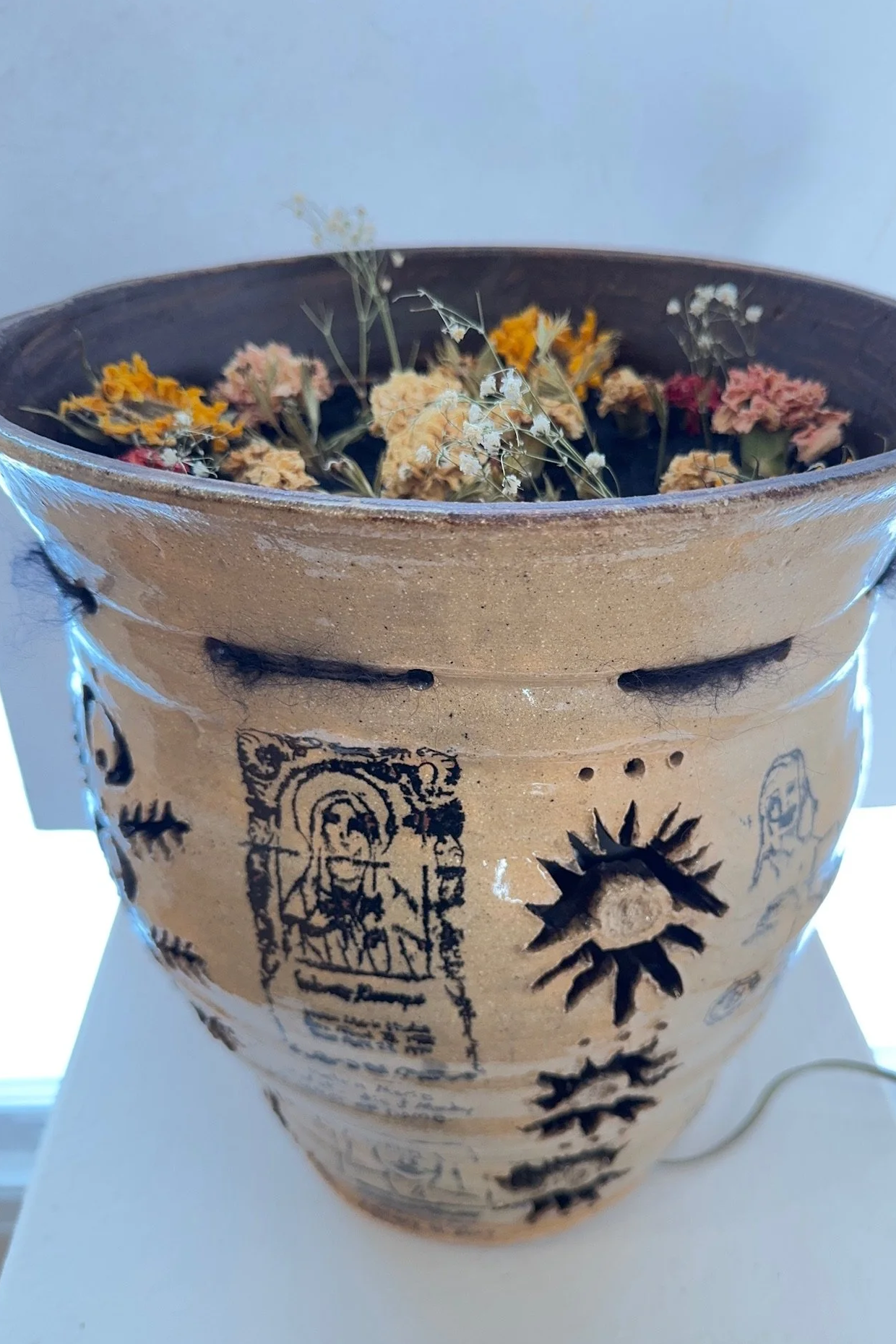
‘I Look Like You, You Look Like Me’ is inspired by one of the last conversations I had with my aunt. She laid on the bed we’d just brought downstairs to the living room so she didn’t have to climb the stairs. At some point I was given a wooden box. When I opened it I was struck — inside were passports stamped with immigration visas, the funeral card for my grandmother, my aunt’s baby teeth. My aunt casually said that I could take them all— after all, my uncle would have no use for them, they weren’t his family members. We also looked through photo albums, and once again I was bowled over. My brother’s ex-girlfriend had once said she didn’t think our father was our birth father, as we both look more like our mom. However in looking at the photos of my aunt as a child I saw my childhood self reflected right back. I said ‘she looks like you’ - meaning my aunt looked like me - and corrected himself, ‘you look like her’.
This piece patches together the histories told only in photographs, the story of my father’s parent’s something not outwardly talked about. In images I explore for the first time images of my grandmother, looking so happy. Her funeral card sits above my aunt’s - both died died of cancer in the same house. I put images of myself as a child alongside images of my aunt, overlapping us and our stories.
I cut folk designs into the vase, and latticed yarn given to my by my aunt on the top of it, with dried flowers from her funeral inserted. I installed a bulb inside - a light to shine on what previously went obscured.
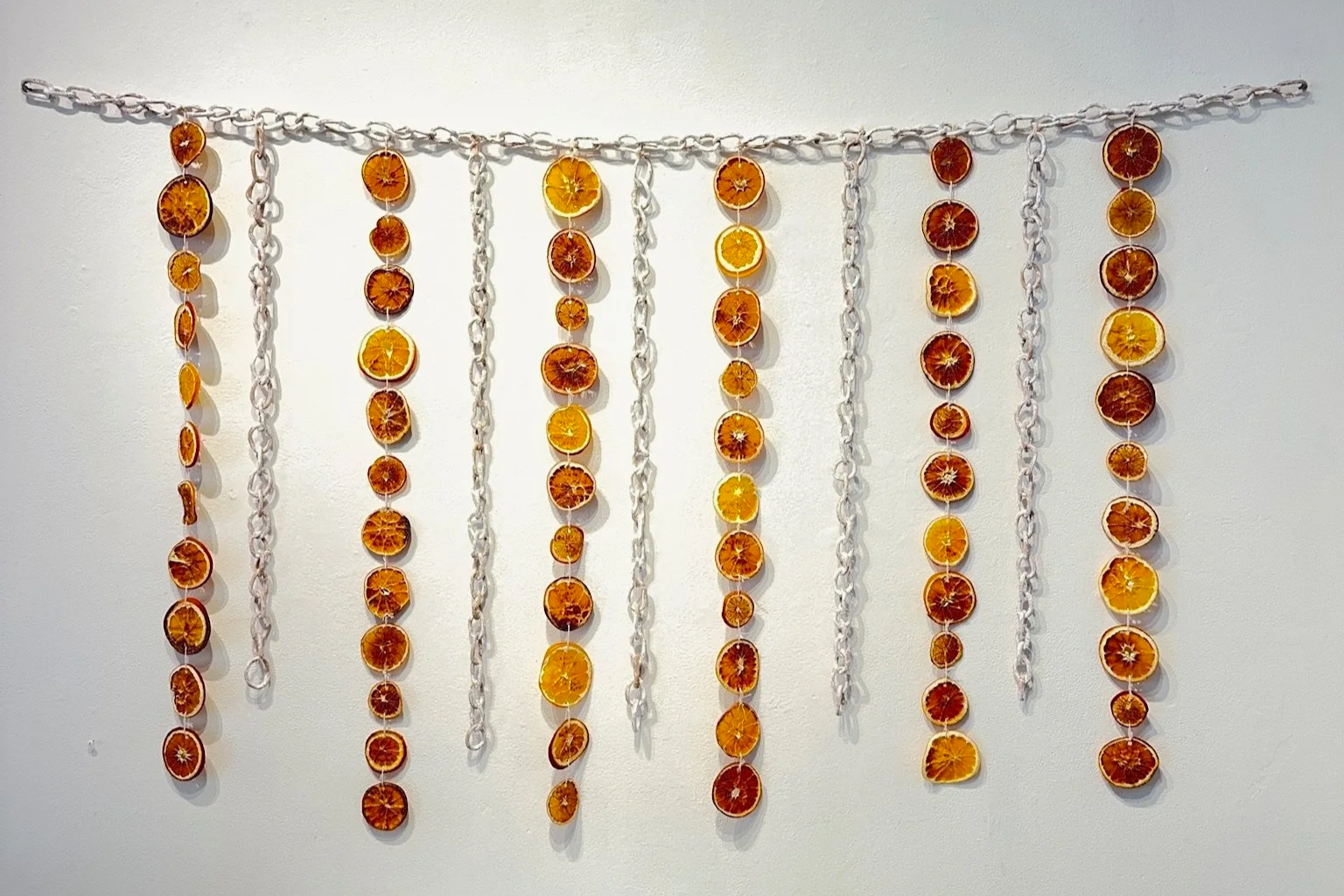
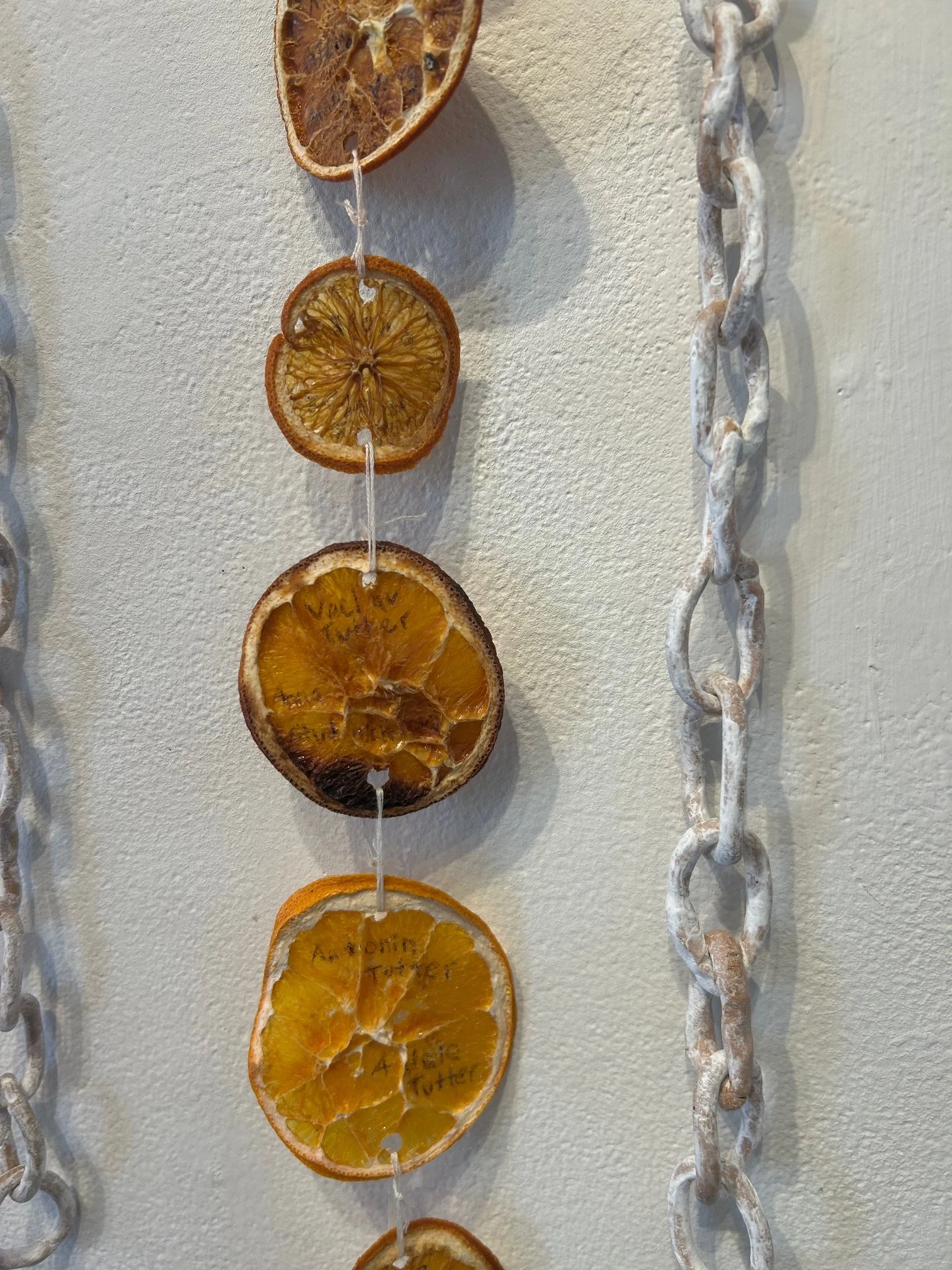
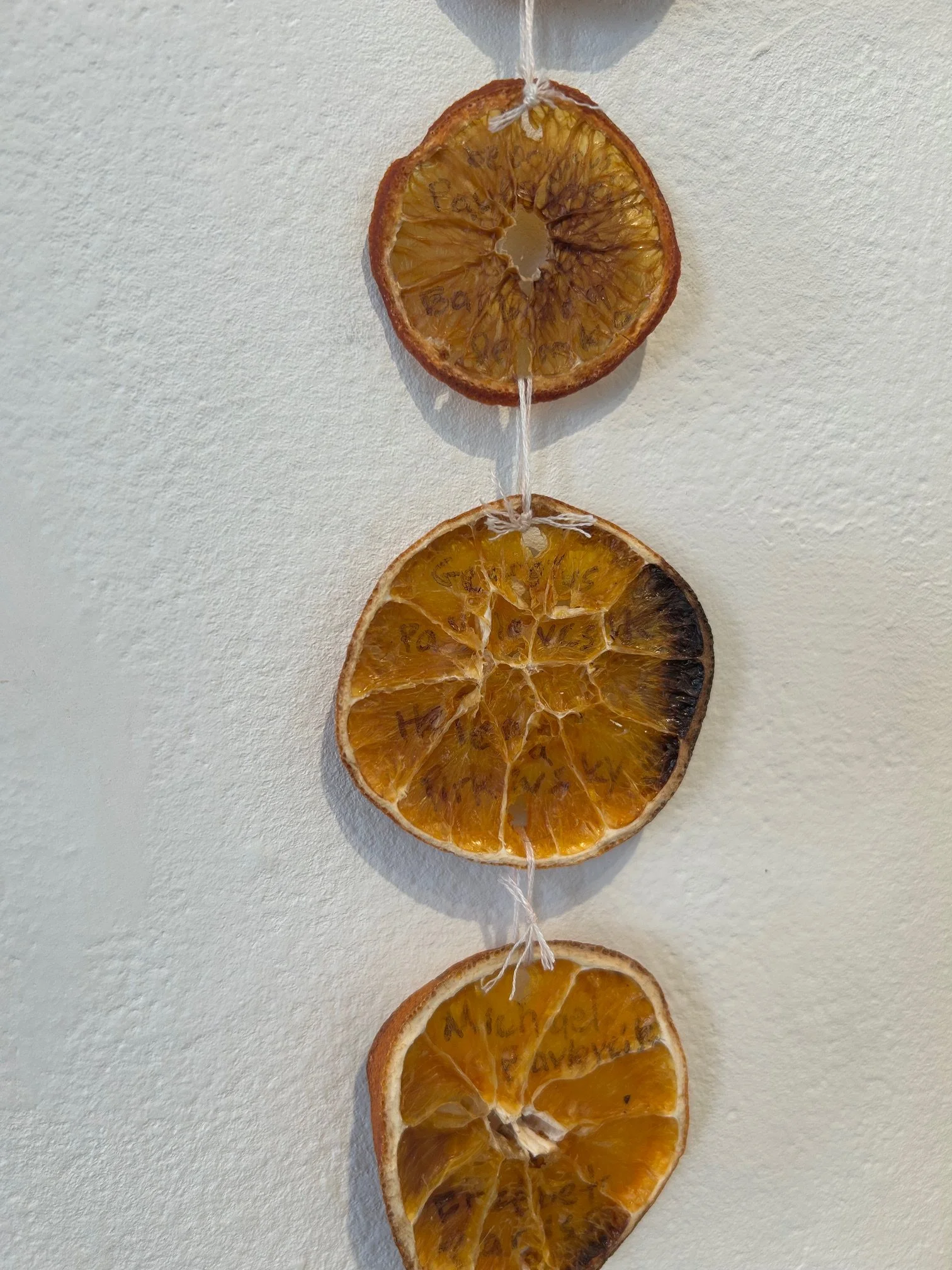
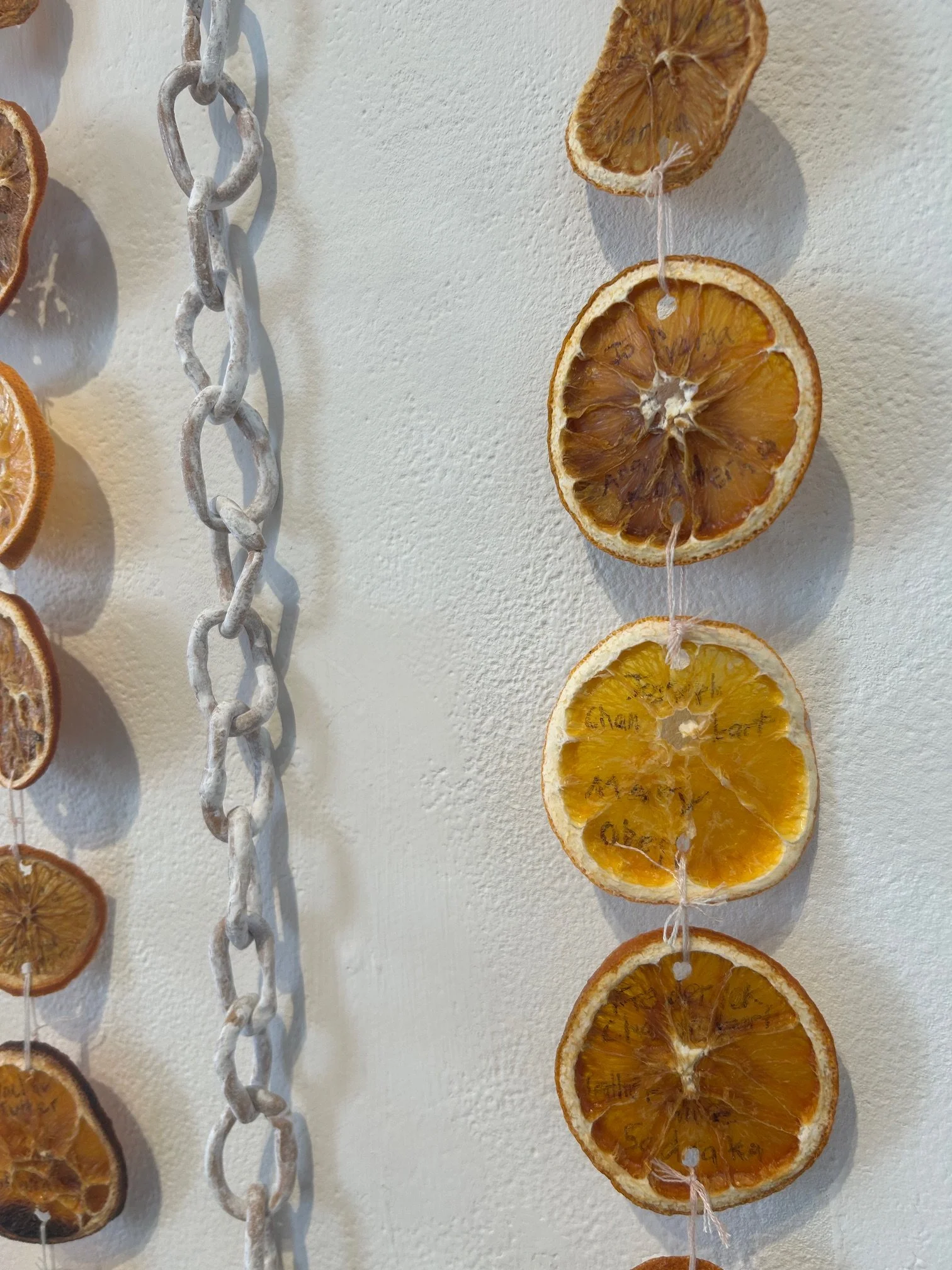
‘Family Chain’ was my attempt to display physically the ancestry research I did several years ago when I first began to explore my Slovakian heritage. I had not many expectations going into my research, but to my surprise was able to trace back several generations of our family in Eastern Slovakia. I put together ceramic chains stained with Mayco Stain, but struggled with how to incorporate the names I’d found. I settled with dried orange slices, slightly crisped, wanting to take advantage of their sweet smell. I wrote the names on the slices to be viewable only when looking close-up. My ideal display of this work would be in front of a window, so as to make the slices act almost like stained glass.
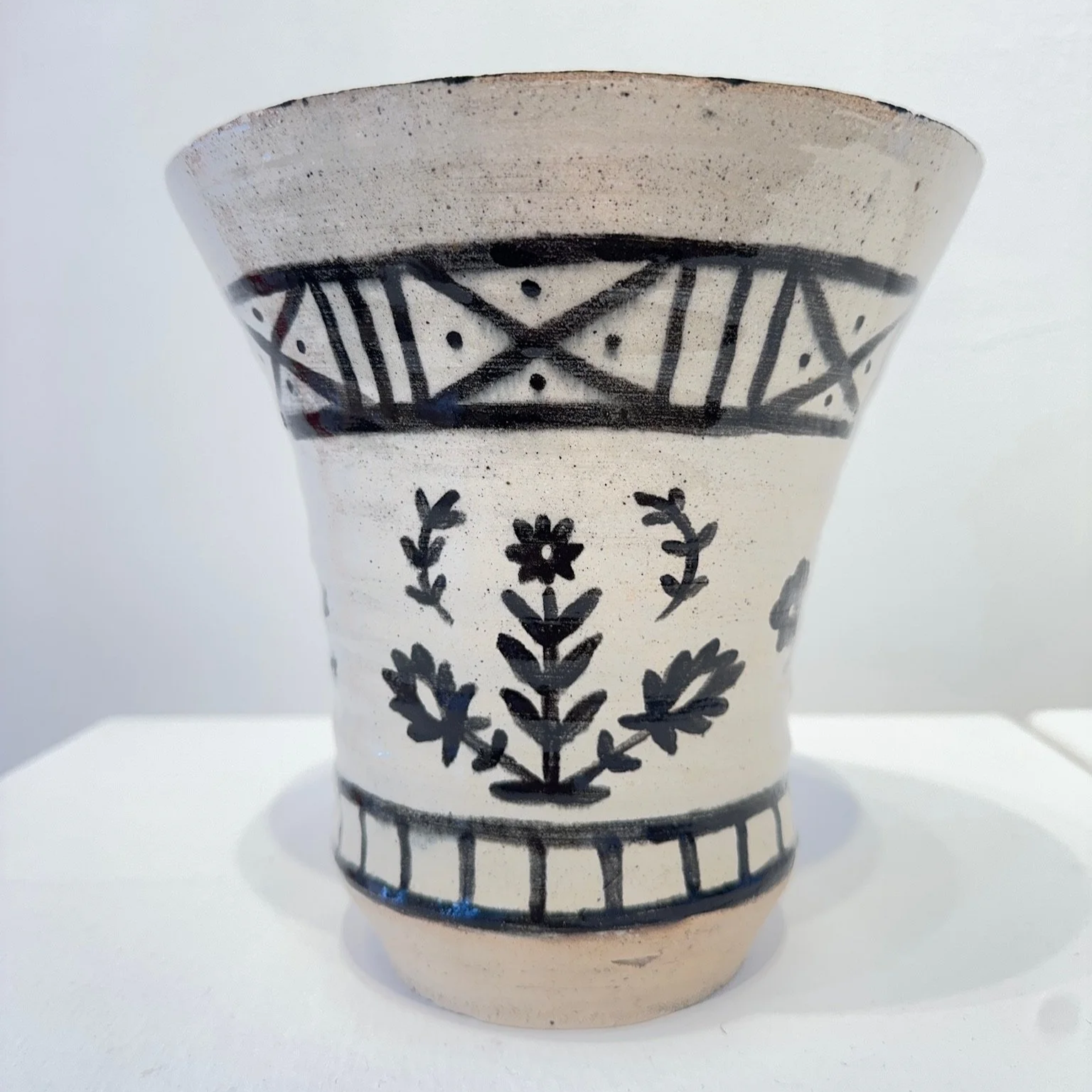
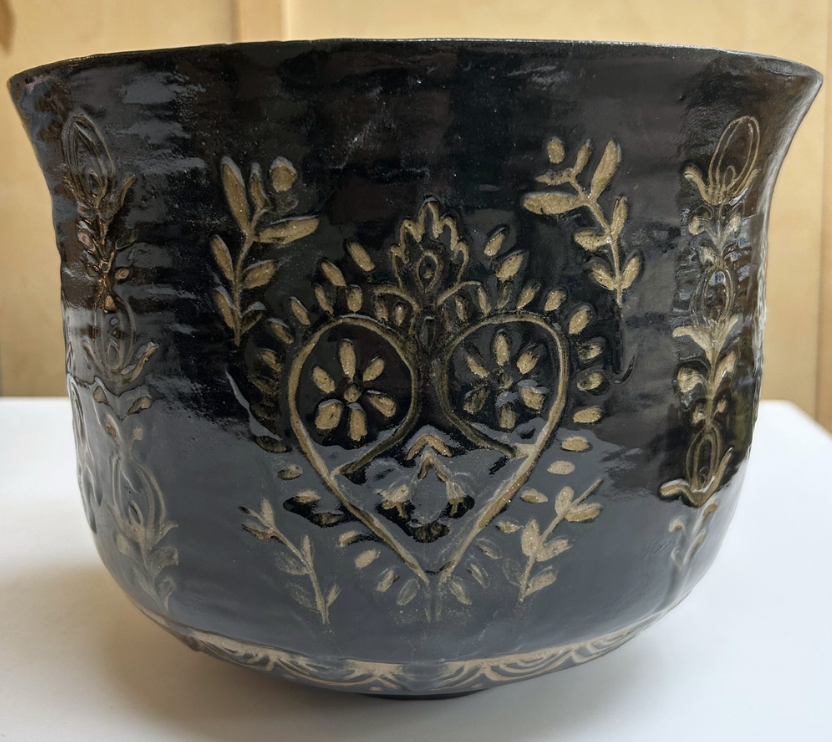
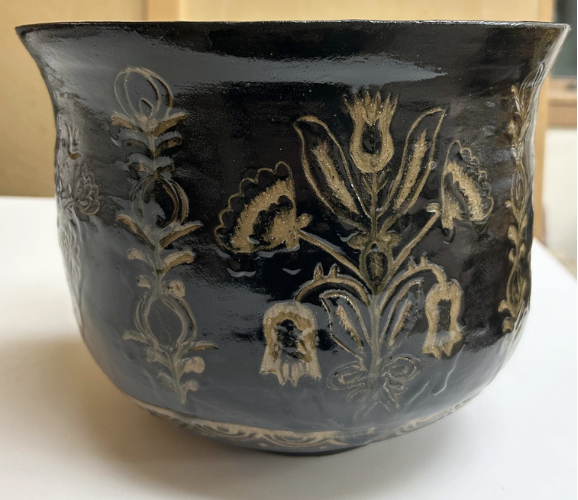
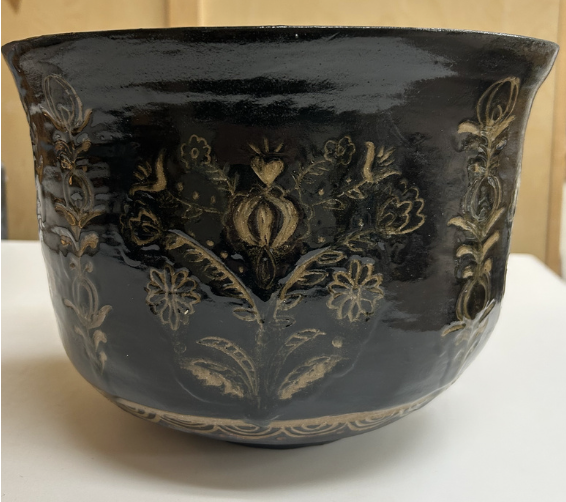
Throughout my residency I threw several works to explore in a more commercial sense my method of carving and painting patterns inspired by Czech and Syrian embroidery and Slovakian folk majolica. It was fun to explore the different applications of pattern work and to combine both historical patterns with modern stylization.